Quick Reference: Throw Distance by Screen Size
Reviewed by the ProjectorVault Editorial Team
Last Updated: June 2026 | Written by the ProjectorVault Editorial Team | 12 min read
Finding the right projector throw distance explained comes down to matching the features to how you will actually use it.
One number stands between you and a breathtaking 120-inch home cinema. Get it wrong, and you'll be staring at a sad, blurry postage stamp taped to your wall.
Throw distance is the silent architect of every great home theater. It's the measured space between your projector's lens and the screen surface, and when paired with the projector's throw ratio, it dictates the size, sharpness, and soul of the image you actually get.
Miscalculate by a few inches and you'll either crash the beam into the back wall or pay premium money for a 120-inch cinematic experience only to wind up with a deflated 60-inch box. Brutal.
This guide unpacks exactly what throw distance is, how to calculate it for your room, and which projector category fits the space you actually have. I've personally wrestled dozens of projectors into rentals, basements, and one truly nightmarish attic with a slanted ceiling that nearly broke me. Every lesson below is one I wish someone had handed me on day one.
Key Takeaways at a Glance
- Throw distance equals the measured space from lens to screen (in feet or meters)
- Throw ratio equals throw distance divided by image width
- The golden formula: Image width equals throw distance divided by throw ratio
- Most home theaters land between 100 and 120 inches diagonal
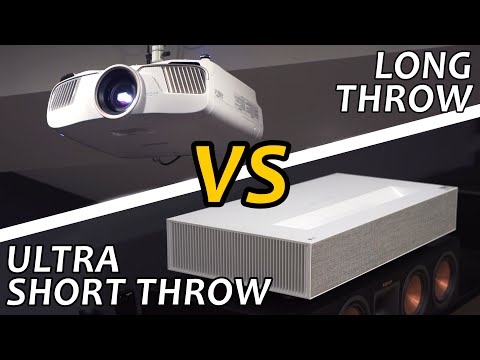
- Ultra Short Throw (UST) projectors sit just inches from the wall
- Long Throw units demand 15+ feet of clear runway
- Measurement error of just 6 inches can shrink your dream screen by a full foot
The Numbers That Make or Break Your Setup
What Is Projector Throw Distance, Really?
Throw distance is the distance from the front of the projector lens to the screen, measured in feet or meters. It pairs with a critical specification called throw ratio, which is simply the ratio of throw distance to image width.
Here's where the magic clicks into place: a projector with a 1.5 throw ratio placed 15 feet from the screen will produce a glorious 10-foot-wide image (15 divided by 1.5 equals 10). Move it closer, the image shrinks. Slide it back, the image grows.
That's the entire dance. No mystery. No marketing fluff.
The Two Formulas You'll Ever Need
> Image width = Throw distance ÷ Throw ratio
> Throw distance = Image width × Throw ratio
Always measure to the front of the lens, never the back of the projector body. Some long-bodied units pack over 10 inches between the rear panel and the front element. That hidden gap can blow your screen size calculation by an entire 6-inch margin, and trust me, you will see it.
Watch: Throw Distance Explained in 4 Minutes

A quick visual walkthrough that pairs perfectly with the formulas above.
The Three Throw Distance Categories (And Which One Is Right For You)
Every projector on the market falls into one of three throw families. Pick the wrong family for your room, and no amount of zoom adjustment will save you.
Ultra Short Throw (UST) — The Living Room Hero
Throw Ratio: 0.4:1 or less
Best For: Apartments, condos, anywhere you can't ceiling-mount
Sits just 4 to 18 inches from your wall and throws a 100-inch image. No shadows when you walk past. No drilling into rented ceilings. The closest thing to a flat-screen TV the projector world offers.
Short Throw — The Bedroom & Den Champion
Throw Ratio: 0.4:1 to 1.0:1
Best For: Medium-sized rooms with limited depth
Place it 3 to 8 feet from the screen and enjoy a massive picture without the price tag of UST. The Goldilocks zone for most modern homes.
Long Throw — The Dedicated Theater Beast
Throw Ratio: 1.5:1 to 2.5:1+
Best For: Basement theaters, dedicated media rooms
Demands 15+ feet of runway but rewards you with the sharpest images, deepest blacks, and the most cinematic light cones in the business.
The 5-Minute Throw Distance Calculator
Grab a tape measure and a calculator. Five minutes from now, you'll know exactly which projector category fits your space.
Step 1. Measure from your intended projector location to the screen wall. Write it down in inches.
Step 2. Decide your dream screen size. Most viewers love 100 to 120 inches diagonal.
Step 3. Convert diagonal to width. For a 16:9 screen, multiply diagonal by 0.872.
Step 4. Divide your throw distance by your target image width. That number is the throw ratio you need.
Step 5. Shop only projectors whose throw ratio range includes your number.
Your couch sits 12 feet from the wall. You want a 110-inch screen (about 96 inches wide). 144 inches divided by 96 inches equals a throw ratio of 1.5. Hunt for a projector with that magic number in its spec sheet.
The 5 Most Painful Throw Distance Mistakes (And How to Dodge Every One)
After setting up more projectors than I care to count, these are the traps that catch even seasoned enthusiasts.
1. Trusting the box art image size. Marketing photos show ideal conditions. Your room is not ideal. Always run the math yourself.
2. Ignoring lens shift range. Throw distance gets you the size, but lens shift decides whether the image actually lands on your screen. Read both specs.
3. Forgetting about ceiling slope. Angled ceilings change effective throw distance. A two-degree tilt over 15 feet is six inches of vertical drift.
4. Cabling the projector before testing. Power it up, project, adjust, then run the wires. Future you will send a thank-you note.
5. Buying for tomorrow's room. That basement remodel might never happen. Buy for the space you have today.
Distances are approximate and depend on each projector's specific zoom range.
The Bottom Line
Throw distance isn't a mysterious specification reserved for engineers. It's the single most important number between you and the cinema experience you've been dreaming about.
Measure twice. Calculate once. Then pick a projector whose throw ratio fits the room you actually live in, not the room you wish you had.
Do that, and you'll never settle for a postage-stamp picture again.
"The best projector in the world is worthless in the wrong room. Throw distance is how you make sure your room is the right one."
Key Takeaways
- Choosing the right projector throw distance explained means matching the key features to your specific needs and budget
- Read real customer reviews and check the return policy before you commit
- Also covers: short throw vs long throw
- Also covers: throw ratio calculator
- Also covers: projector distance from screen
- Compare value across models — the priciest option is not always the best fit