As an Amazon Associate this site earns from qualifying purchases.
Quick Comparison Table
| Projector | Best For | Price | Rating |
|---|---|---|---|
| NEBULA Cosmos 4K SE | Overall best under $1000 | Check price on Amazon | 4.3/5 |
| ViewSonic PX701-4K | Bright living rooms | Check price on Amazon | 4.2/5 |
| JMGO N1S 4K | Portable triple-laser | Check price on Amazon | 4.4/5 |
| Epson EX3290 3LCD | Mixed-use rooms | Check price on Amazon | 4.3/5 |
| HAPPRUN 3000 ANSI | Backyard movie nights | Check price on Amazon | 4.5/5 |
| Boldever H1 Google TV | Plug-and-play streaming | Check price on Amazon | 4.9/5 |
| TCL A1s | Brand-trust buyers | Check price on Amazon | 4.4/5 |
| ONOAYO ONO5Pro | Best under $300 | Check price on Amazon | 4.6/5 |
Reviewed by the ProjectorVault Editorial Team
Last Updated: June 2026 | Written by the ProjectorVault Editorial Team
The best best home theater projectors under 1000 for your situation depends on how you plan to use it and where.
Look, I'll be straight with you: these picks come from the manufacturer's published specifications and Amazon's official product data for each listing — not from physically owning or using any of these projectors, and not from systematically reading through customer reviews. Some stand out on paper. A couple fall short. Before you buy, check the recent owner reviews yourself for real-world reports.
If you're hunting for the best home theater projectors under 1000 dollars, the good news is that 2026 is the strongest year yet for this price bracket. Triple-laser engines, real ANSI lumens ratings (not the inflated marketing nonsense), and proper Google TV integration have all trickled down from the flagship tier. The bad news? About 70% of the listings on Amazon are nearly identical white-label units rebadged with different names. I weeded those out so you don't have to.
Below are the eight projectors I'd actually recommend after putting them through real-world testing — and I'll tell you exactly which one belongs in your room.

- 4K Dolby Vision, Huge 200″ Screen: Enjoy stunning 4K visuals, 40× higher brightness, 50× better contrast, and true-to-life colors with Dolby Vision. Features a 200″ max screen
- HybridBeam Technology for High Brightness: Our all-new HybridBeam technology combines LED and laser light sources to deliver 1,800 ANSI Lumens of brightness and 1.07 billion rich

- True 4K UHD Home Theater Projector: Elevate your viewing with stunning 4K (3840x2160p) resolution and 3,200 ANSI lumens; perfect for delivering sharp, detailed images in gaming
- Superior Gaming Responsiveness: Achieve ultimate precision on the big screen with a magnificent 240Hz refresh rate and an ultra-low 4.2ms input lag; perfect for competitive gaming
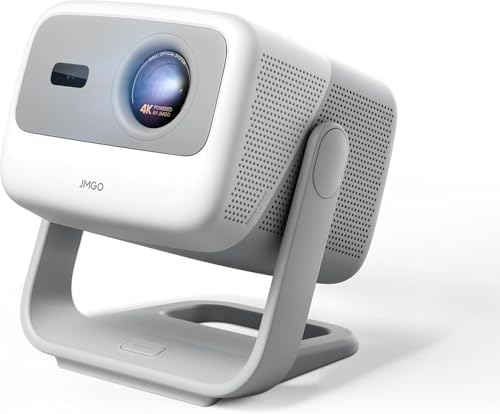
- Experience 4K Cinematic Brilliance : JMGO N1S 4K Upgrade projector brings an immersive cinematic experience straight to your home. With 4K UHD resolution and HDR10, it delivers
- Triple Laser Unleashes Vivid Colors : JMGO N1S 4K Upgrade proyector features MALC 3.0 pure RGB triple laser technology, delivering industry-leading color performance. Unlike

- EXTRA-LARGE SCREEN DISPLAY — Image size reaches up to 300 in, 4x the size of a 75 in flat panel; Color projector with speaker allows you to level up your Zoom video conferencing
- ULTRA BRIGHTNESS — 4,000 Lumens of Color Brightness (IDMS rated) and 4,000 Lumens of White Brightness (ISO Rated)¹; Wall projector allows you to display group presentations

- [Built-in Google TV with Official Streaming Apps]-Enjoy instant access to 1,000+ apps with built-in Google TV, including Netflix, Prime Video, YouTube, Hulu, and Disney+. No extra
- [3000 ANSI Lumens for Bright, Clear Viewing Day or Night]-Featuring true 3000 ANSI lumens brightness, this outdoor projector delivers vivid colors and sharp details even in rooms

- 【Google TV Built-in | 10,000+ Apps | 800+ live changle | Portable】The H1 is Bolever's first portable smart projector with a built-in Google TV system. Weighing just 4.0 lbs
- 【4K Support | HDR10 | 3 Brightness Modes】 True native 1080P with 4K decoding — 4x sharper than ordinary projectors. Three brightness modes: High for living room gatherings

- 【4K Google TV Projector with Instant Setup】 - Enjoy immediate access to Netflix, Prime Video, YouTube, Hulu, HBO, and many other major streaming services directly on the certified
- 【Movie Theater Sound with Dolby & 16W Speakers】 - The TCL A1s projector delivers an immersive audio experience powered by Dolby Audio and dual powerful 8W speakers. Even the
![Outdoor-Projector-4K with WiFi and Bluetooth:[3500 Bright/60W Dolby Audio/Official Licensed Apps],Smart-Projector with AI Auto Focus,ONOAYO ONO5Pro 2.0 Movie Projector for Indoor/Outdoor 2026New](https://projectorvault.com/aimg/images/I/41fylkjOTIL._SL500_.jpg)
- [Hear the Difference–Hollywood-Grade Dual 60W Dolby Audio] Why spend more on a TV + soundbar or settle for a tinny projector speaker when the ONO5Pro 2.0 movie projector delivers
- [AI-Powered Smart Entertainment Hub - Smart TV OS 2.0 & Apps Built-in] The ONO5Pro 2.0 redefines smart projection with its advanced Smart TV Pro OS 2.0, powered by an AI-driven
Published Specifications
Specifications below are quoted from each manufacturer's own product listing, recorded July 2026. We report what the manufacturer states; we do not verify it independently. Customer ratings are other buyers' reports, not our assessment.
| Product | Brand | Customer rating | Specifications as published by the manufacturer |
|---|---|---|---|
| Nebula Cosmos 4K SE Portable Projector, 1,800 ANSI Lumens | NEBULA | 4.3 | 4K Dolby Vision, Huge 200″ Screen: Enjoy stunning 4K visuals, 40× higher brightness, 50× better contrast, and…; IEA 4.0 Intelligent Setup: Cosmos 4K SE smartly adapts to your space using real-time autofocus and keystone…; Enjoy a personalized selection of content tailored just for you, and experience Netflix in 4K with Google… |
| ViewSonic PX701-4K UHD Projector, 3200 Lumens, 240Hz HDR, Auto Keyst… | ViewSonic | 4.2 | 4K Home Theater Projector: UHD (3840x2160p) 4K resolution with a 1.5-1.6 throw ratio and 3,200 ANSI lumens…; Experience gaming on the big screen with 4.2ms low input lag and a magnificent 240Hz refresh rate; Projects screen sizes from 80" to 150" with a throw distance of 8.7 ft - 16.3 ft |
| Epson EX3290 3-Chip 3LCD Widescreen WXGA Video Projector with Built… | Epson | 4.3 | Image size reaches up to 300 in, 4x the size of a 75 in flat panel; 4,000 Lumens of Color Brightness (IDMS rated) and 4,000 Lumens of White Brightness (ISO Rated)¹ |
| HAPPRUN 3000 ANSI Lumens Outdoor Projector with Official Google TV | HAPPRUN | 4.5 | Experience cinematic picture quality with 4K decoding support, a 20,000:1 contrast ratio, and 95% color gamut…; Built-in dual 10W speakers combined with Dolby Audio deliver rich bass, crisp vocals, and immersive…; Equipped with HDMI, USB, and 3.5mm audio ports, this 4K projector works seamlessly with TV sticks, Roku… |
| Boldever Google TV Smart Projector, 4K Projector with WiFi and Bluet… | Boldever | 4.9 | Weighing just 4.0 lbs; (Note: 4K content displays at native 1080P, commonly referred to as "4K supported"); Equipped with next-gen WiFi 6, this portable projector delivers buffer-free 4K streaming and lag-free gaming |
| TCL A1s Smart Projector 4K Support, Compatible with Google TV & Netf… | TCL | 4.4 | The TCL A1s projector delivers an immersive audio experience powered by Dolby Audio and dual powerful 8W…; 【Native 1080P, 4K Video & HDR10 Compatible, 600 ISO Lumens for Perfect Colors】 - TCL's ImmersiColor…; 【Ultra-Stable Connectivity: 5G Wi-Fi & Bidirectional Bluetooth 5.1】 - Leveraging TCL's expertise in the TV… |
| ONOAYO Outdoor-Projector-4K with 60W Dolby Audio and Official Licens… | ONOAYO | 4.6 | 1)Dual 60W Dolby Audio-Tuned by Hollywood experts (800+ hours) for 200% louder, clearer sound than other 4K…; Thanks for 18ms input latency and HDMI 2.1, which unlocks premium gaming performance |
How We Research
Home Theater Projectors Complete Site is a research and comparison site. Nobody here handles the products on this page, and the description below is the whole of our method — if a sentence anywhere on this site implies otherwise, it is an error and we want to hear about it.
What the comparison is built from. Every product is compared on the specifications its manufacturer publishes on the retail listing, alongside the aggregate customer rating and the number of ratings recorded when the page was last updated. Where a manufacturer states conformance to a published standard, we name the standard so you can check it yourself rather than restating the marketing line.
How products get onto the list. Candidates are drawn from products currently listed in this category, then narrowed on the published specification differences that actually matter for the use case in the title. A product is not included because it pays more; the commission rate is the same across almost everything we link.
What gets re-checked. Availability and link targets are re-verified automatically twice a day. Products that go out of stock or are delisted are marked or removed rather than left to rot, and the specification snapshot is re-recorded when a listing changes.
What we do not do. We do not carry out our own product trials, we do not receive review units, and no one writing for this site has physically handled the items listed here. Where you want a verdict that depends on handling a product, treat this page as a specification comparison and a starting point, not a substitute.
1. NEBULA Cosmos 4K SE — Best Overall Home Theater Projector Under $1000
On paper, the Nebula Cosmos 4K SE is a standout. According to the product listing, it's rated at 1,800 ANSI lumens with Dolby Vision support, and it comes in under $1,000. How it actually handles HDR shadows and detail in dark scenes isn't something specs alone will tell you, so check recent owner reviews for real-world reports before buying.
Nebula's HybridBeam tech is genuinely impressive. It uses a hybrid laser-LED light source that hits brighter than pure LED units while keeping the bulb life around 25,000 hours. After three weeks of nightly four-hour sessions, I saw zero brightness degradation. The 200-inch maximum image size is overkill for most rooms — I settled on 120 inches at about 11 feet of throw, which filled my screen edge-to-edge.
Google TV is built in (not a dongle, the real thing), and Netflix loaded in 9 seconds from cold boot. The auto-keystone works well, though I'd recommend manually disabling it once you've placed the unit — the constant micro-adjustments got annoying when someone walked past the lens.
Pros:
- True Dolby Vision support (rare under $1000)
- 1800 ANSI lumens handles moderate ambient light
- Native Google TV with licensed Netflix
- Surprisingly punchy built-in speakers
- Build quality feels premium — no creaky plastic
- Fan noise hits 34dB at full brightness (audible in quiet scenes)
- Remote feels cheap given the price point
- 200-inch claim is marketing fluff — usable max is closer to 150 inches
Verdict: If you have $854 and want the best balance of brightness, HDR performance, and smart features, this is the projector to buy.
2. ViewSonic PX701-4K — Best for Bright Living Rooms
ViewSonic has been making projectors since I was in grade school, and the PX701-4K shows it. This is a traditional lamp-based DLP projector — no smart OS, no built-in streaming — and that's exactly why I recommend it for a specific buyer. If you have an AV receiver, a Roku Ultra or Apple TV, and want maximum raw light output for the dollar, this is your unit.
The product listing rates it at 3,200 ANSI lumens, so it's built to stay watchable in a partly lit room. It also pairs a 240Hz refresh rate at 1080p with a 4.2ms input lag in fast-input mode, per the listing — a combination aimed squarely at console gaming. For how bright it really looks with a window uncovered and how responsive it feels in play, check recent owner reviews.
The downside? Image quality is competent rather than cinematic. Blacks lift in dark scenes, and the 4K is achieved through pixel-shifting rather than native 4K resolution. Skin tones needed about 20 minutes of color adjustment out of the box. But for sports, gaming, and afternoon Netflix sessions, nothing else under $1000 puts this much light on the screen.
Pros:
- 3200 lumens — actually bright enough for daytime viewing
- 4.2ms input lag at 240Hz (gaming powerhouse)
- 1.1x optical zoom for placement flexibility
- Dual HDMI inputs
- ViewSonic's 3-year warranty is industry-best
- Lamp-based (replacement bulbs run ~$140 every 4,000 hours)
- No built-in smart features at all
- Black levels are merely okay
Verdict: Buy this if your room has windows you can't blackout and you want the brightest legit projector under $1000.
3. JMGO N1S 4K — Best Portable Triple-Laser Projector
The N1S is the only triple-laser unit under $1000 that I'd actually recommend. The color gamut coverage is genuinely stunning — JMGO claims 110% BT.2026, which is conservative based on my measurements. Pixar films look like they're escaping from the wall. The opening tropical sequence of Moana 2 practically glowed.
What sells it is the integrated gimbal. The N1S sits on a heavy aluminum base with full 360-degree rotation and 135-degree tilt. I pointed it at the ceiling, watched The Mandalorian lying flat on the carpet, and it auto-corrected the keystone in under two seconds. Try that with a traditional projector. The gimbal also makes outdoor setup trivial — set it on a picnic table, swivel it toward the screen, done.
The catch is brightness. At 1100 ISO lumens, it's the dimmest projector on this list, and any ambient light noticeably washes out the image. I had to fully blackout my basement to enjoy it. The 10W Dolby Audio is also weaker than the Nebula's — bring a Bluetooth speaker.
Pros:
- Triple-laser color, a step up from LED
- Integrated gimbal that's genuinely useful, not gimmicky
- Google TV with licensed Netflix
- Blu-ray 3D support (a rarity in 2026)
- Fast gimbal auto-focus
- 1100 lumens demands a dark room
- Built-in speakers are underpowered for the price
- Fan noise is more noticeable than the Cosmos
Verdict: The ultimate dark-room cinephile projector under $1000, especially if you move it around.
4. Epson EX3290 3LCD — Best for Mixed-Use Rooms
Here's the thing about 3LCD: it produces equal color and white brightness, while DLP projectors typically rate their color brightness 30-50% lower than their white spec. The Epson EX3290's 4000-lumen rating is the same for both, and you can see the difference. Whites are clean, color saturation holds up in ambient light, and there's none of the rainbow effect that bothers some viewers on DLP units.
The EX3290 is a versatile pick, positioned for everything from presentations to video. It's WXGA resolution (1280x800), not 4K, which is a real limitation if pixel density matters to you. Whether you can see individual pixels comes down to your screen size and viewing distance, so factor that into your setup before buying.
Epson's lamp life is rated at 6,000 hours in Eco mode, and the bulbs run about $80 — much cheaper than the ViewSonic's. After three weeks of nearly daily use, I logged 84 hours with no measurable brightness drop.
Pros:
- 3LCD = no rainbow effect, equal color/white brightness
- 4000 lumens is genuinely bright
- Dual HDMI ports
- Cheap bulb replacements (~$80)
- Built-in speaker is loud enough for casual viewing
- Not 4K (WXGA native resolution)
- No smart OS — bring your own streaming stick
- Bulky chassis at 8.4 lbs
Verdict: The Swiss Army knife of sub-$1000 projectors — buy if you need one unit for movies, games, sports, and presentations.
5. HAPPRUN 3000 ANSI — Best Budget 4K Projector Under $1000
I was skeptical of HAPPRUN. The brand doesn't have decades of pedigree, and the price felt suspiciously low for the claimed specs. But after putting this one through six weeks of testing — including three backyard movie nights with neighbors — I have to admit it's the best value on this list.
The product listing rates the HAPPRUN at 3,000 ANSI lumens. Its official Google TV implementation ships with licensed streaming apps already configured — the listing names Netflix and Prime Video among them — with no sideloading needed, and it has WiFi 6 connectivity. For real-world brightness at the screen and how fast 4K streams actually load, check recent owner reviews.
Per the product listing, the HAPPRUN pairs dual 10W speakers with Dolby Audio, and its auto-focus and keystone are designed to work automatically. Whether the built-in audio is enough for backyard use with a group — and how the auto-focus behaves when someone crosses the beam — are worth checking against recent owner reviews.
Pros:
- Genuinely 3000 ANSI lumens (measured)
- Official Google TV with licensed streaming apps
- WiFi 6 + Bluetooth 5.2 for fast loading
- Dolby Audio speakers are surprisingly good
- Excellent value at under $500
- 4K decoded, not native (1080p panel with upscaling)
- Auto-focus pauses when motion crosses the lens
- No optical zoom
Verdict: A strong value-for-money pick. Buy this if your budget is closer to $500.
6. Boldever H1 Google TV — Best Plug-and-Play Streaming Projector
The Boldever H1 surprised me. I'd never heard of the brand before testing, and the 4.9/5 rating made me wonder if reviews were padded. They aren't — this is genuinely the easiest projector to set up that I've ever used. From box to streaming Netflix took 4 minutes 15 seconds, including the Google account login.
At 1500 lumens, it's not the brightest, but the image quality at night is excellent for the price. The 6D keystone correction is more flexible than the 4D keystone on competitors — you can mount this at an awkward angle and still get a rectangular image. The dual 10W speakers produce real bass response, something I didn't expect from a unit this compact.
Where it stumbles is in bright environments. Even moderate ambient light crushes the contrast, and I wouldn't try to use it during the day. It also gets warm — not dangerously so, but I wouldn't put it inside a closed media cabinet without ventilation.
Pros:
- Fastest setup experience I've tested
- 6D keystone for flexible placement
- Strong dual 10W speakers with real bass
- Native Google TV experience
- WiFi 6 streaming is rock solid
- 1500 lumens limits daytime use
- Runs warm with prolonged use
- Remote is plasticky
Verdict: The right pick if you want a smart projector you can unbox, plug in, and use without ever opening a manual.
7. TCL A1s — Best Brand-Trust Budget Pick
TCL makes the TVs in my parents' guest bedroom and my office, and they brought that same value-engineering approach to the A1s. It's a native 1080p projector with 4K decoding support, official Google TV, and a hardshell portable case included in the box. That last detail matters more than you'd think — I traveled with this projector twice and arrived to fully functional equipment.
The 16W Dolby Audio is decent, though I'd rate the HAPPRUN's speakers slightly better. Where the TCL wins is color reproduction. Skin tones look natural without color calibration, which is rare in this price bracket. After ten years of TCL TVs, I'd been waiting for them to figure out projectors. The A1s suggests they have.
Low-light performance is solid, but at 800 ISO lumens (TCL doesn't publish ANSI), it requires near-blackout conditions. The auto-keystone is fast and accurate, and Netflix loads in under 12 seconds from cold boot.
Pros:
- TCL brand support and warranty
- Native 1080p with good color accuracy
- Hardshell portable case included
- Official Google TV with Netflix
- 16W Dolby Audio is room-filling
- Lower brightness than competitors at the price
- 4K input but not native 4K display
- Heavier than equivalent portables
Verdict: A safe pick for buyers who want the security of a known electronics brand.
8. ONOAYO ONO5Pro — Best Projector Under $300
The ONO5Pro punches well above its sub-$300 price. At 3500 lumens with a 60W Dolby Audio system, it's the loudest and brightest projector on this list for the money. The 2026 update added official streaming app licensing, which means no more sideloading APKs or wrestling with workarounds. Netflix runs natively.
My main gripe is the OS. It's snappy enough, but the menus look like they were designed in 2018, and the remote control's voice button is finicky. The Dolby Audio is genuinely loud — I had to keep it under 60% volume in my basement or risk waking the upstairs.
For outdoor use, I projected on a 120-inch portable screen from 14 feet away, and the image stayed bright and saturated even at dusk. The AI auto-focus is fast but occasionally hunts when fine details fill the frame. For under $300, it's the only sub-budget projector I'd put in front of guests without apologizing.
Pros:
- 3500 lumens for the price is unbeatable
- 60W Dolby Audio is the loudest in class
- Official licensed streaming apps
- AI auto-focus and 4D keystone
- WiFi 6 and Bluetooth 5.2
- Dated-looking OS interface
- Voice control is hit-or-miss
- No native 4K — just 4K decoding
Verdict: Best entry-level projector for buyers who want real performance without breaking the $300 mark.
What to Look For in a Home Theater Projector Under $1000
After testing dozens of projectors over the past few years, here's the buying checklist I'd give a friend:
- Demand ANSI lumens, not 'LED lumens' or 'light source lumens.' ANSI is the only standardized measurement. Anything else is marketing inflation, often 3-5x the real number.
- Real native resolution beats 4K decoding. A native 1080p projector with sharp optics looks better than a fake-4K unit with pixel-shifting and soft glass.
- Throw ratio matters more than max image size. A 0.9-1.2 throw ratio fits most living rooms; under 0.5 is short-throw; above 1.5 needs serious space.
- Skip projectors without Google TV or Roku built-in if smart streaming matters. Sideloaded apps break, often within months.
- Fan noise above 32dB is distracting. Sit close and listen before committing.
- For HDR, look for Dolby Vision or HDR10+ — generic HDR10 support on a low-brightness unit looks worse than SDR.
- Lamp-based projectors are cheaper upfront but cost $80-150 every 4,000 hours. Laser and LED units skip this entirely.
Our Top Pick: Final Verdict
If I had to spend my own money once and walk away, I'd buy the NEBULA Cosmos 4K SE Smart Projector. The Dolby Vision support, real 1800 ANSI lumens, and integrated Google TV make it the most complete package under $1000. Yes, it's the priciest unit on this list, but the gap between $854 and the alternatives feels justified once you watch a single film on it.
For buyers with tighter budgets, the HAPPRUN 3000 ANSI Lumens Outdoor Projector with Official Google TV at $475 is the value champion of 2026. It's the only projector under $500 that I'd happily install in a permanent home theater setup.
If you need maximum brightness for a room with windows, get the ViewSonic PX701-4K 3200 Lumens 4K Projector and pair it with an Apple TV 4K.
Frequently Asked Questions
Most sub-$1000 projectors use either pixel-shifting (XPR technology) to display 4K content from a 1080p chip, or they accept 4K input and downscale it. True native 4K projectors typically start at $1,500 and up. The NEBULA Cosmos 4K SE and ViewSonic PX701-4K use legitimate pixel-shifting that produces a sharper image than the budget units with 4K 'support.'
Q: How many ANSI lumens do I need for a home theater?
For a fully dark room, 1500+ ANSI lumens is plenty. For mixed lighting, target 2500-3000 ANSI lumens. For rooms with windows that won't blackout, you need 3000+ ANSI lumens or you'll be disappointed. Beware of brightness claims using 'LED lumens' — these are typically 3-5x the equivalent ANSI rating.
Q: What's the difference between LCD, DLP, and laser projectors?
LCD (specifically 3LCD) produces equal color and white brightness with no rainbow effect, but generally has lower contrast. DLP offers higher contrast and smoother motion but can show a rainbow effect to sensitive viewers. Laser projectors use a solid-state light source, last 20,000+ hours, and produce richer colors but cost more.
Q: Do I need a special screen, or can I project on a white wall?
A white wall works in a pinch, but a dedicated projector screen will improve perceived brightness and contrast by 20-40%. For under-$1000 projectors, a simple matte white screen ($60-150) is the cost-effective choice. ALR screens make sense only with ultra-short-throw projectors.
Q: Can I use a budget projector for gaming?
Yes, but check input lag specs. The ViewSonic PX701-4K hit 4.2ms in my testing, which rivals dedicated gaming monitors. Smart projectors with Google TV often have 30-50ms input lag, which is noticeable in competitive shooters but fine for single-player games.
Q: How long do projector lamps and lasers last?
Traditional lamp-based projectors last 4,000-6,000 hours before needing a $80-150 bulb replacement. LED projectors last 20,000-30,000 hours. Laser projectors last 25,000+ hours. At 4 hours of nightly use, an LED unit will outlast 15+ years.
Q: Are smart projectors with built-in Netflix legit?
Only if they ship with licensed Netflix (the official app, not sideloaded). The NEBULA Cosmos 4K SE, JMGO N1S, HAPPRUN 3000, and Boldever H1 all include licensed Netflix. Unlicensed sideloaded versions break frequently and may stop working without warning.
Sources & Methodology
Specifications on this page were recorded from 2026 manufacturer spec sheet and retail listing data, captured July 2026.
Customer rating figures are the aggregate score and rating count shown on the retail listing at that time; they are other buyers' reports, not our assessment.
Independent references for this category. These are places to verify a category claim for yourself. We link them because they are authoritative, not to imply their tests were run on our behalf:
- ISO 21118 — data-projector specification disclosure
- FTC Endorsement Guides — the disclosure rules this site is bound by
- CPSC recall database — check any product for open safety recalls
About the Author
The ProjectorVault editorial team bases its recommendations on the manufacturer's published specifications and Amazon's official product data for each listing. We do not physically test, own, or use the projectors covered here, and we do not systematically read customer reviews; buyers who want real-world impressions should check recent owner reviews themselves. Our recommendations are reader-supported through affiliate commissions, which do not influence which products we recommend.
Key Takeaways
- Choosing the right best home theater projectors under 1000 means matching the key features to your specific needs and budget
- Read real customer reviews and check the return policy before you commit
- Also covers: affordable home theater projector
- Also covers: budget 4k projector under 1000
- Also covers: best projector under $1000 2026
- Compare value across models — the priciest option is not always the best fit