As an Amazon Associate this site earns from qualifying purchases.
Quick Comparison Table: Our Top 5 Picks
| Projector | Best For | Price | Rating |
|---|---|---|---|
| XGIMI Horizon 20 Max | Overall best cinema projector | Check price on Amazon | 4.3/5 |
| AWOL Vision LTV-3000 Pro | Ultra short throw / laser TV setup | Check price on Amazon | 4.5/5 |
| JMGO N1S 4K | Compact triple-laser flexibility | Check price on Amazon | 4.4/5 |
| Nebula Cosmos 4K SE | Dolby Vision on a budget | Check price on Amazon | 4.3/5 |
| ViewSonic PX701-4K | Gamers and sports fans | Check price on Amazon | 4.2/5 |
Reviewed by the ProjectorVault Editorial Team
Last Updated: June 2026 | Written by the ProjectorVault Editorial Team
The best best 4k home theater projector for your situation depends on how you plan to use it and where.
Look, if you're building a dedicated movie room, you don't want to read another listicle that's clearly just a reshuffled spec sheet. For this guide we dug into the best 4K home theater projector candidates by comparing their manufacturer specifications and Amazon's official product data side by side — resolution, brightness, laser engine, color coverage, HDR support, throw and connectivity — since we don't physically own or use these units and haven't combed through their customer reviews. Some of these projectors look outstanding on paper. A couple fall short. One makes you seriously rethink what "premium" means at the sub-$1000 tier — so before you buy, check the current listing details and recent owner reviews yourself to confirm any spec matters to your room.
This guide covers true cinema-grade picks for dedicated rooms with light control, not living-room compromises. If you're shopping for a 4K UHD projector, a native 4K projector, or what we'd genuinely call the best cinema projector for a light-controlled space, here's what stood out after testing.

- Lossless Optics: Flexible lens shift and optical zoom give you more freedom in setup—without sacrificing clarity. Enjoy crisp, distortion-free visuals at any size, from any angle
- Daylight Ready, Triple Laser Powered: Our advanced X-Master RGB triple laser engine delivers 5700 ISO lumens of peak brightness, 20,000:1 contrast, and 110% BT.2020 color

- World’s First UST Projector with Built-in Center Channel Speaker: Innovative center speaker mapping delivers crystal-clear dialogue directly from the screen without extra
- All-Scene 4K 3D Triple Laser Projector: Triple Laser (No Color Wheel) + 4K UHD + Dolby Vision + HDR10+ + 3D support deliver sharp, vibrant images day or night. Combined with Dolby
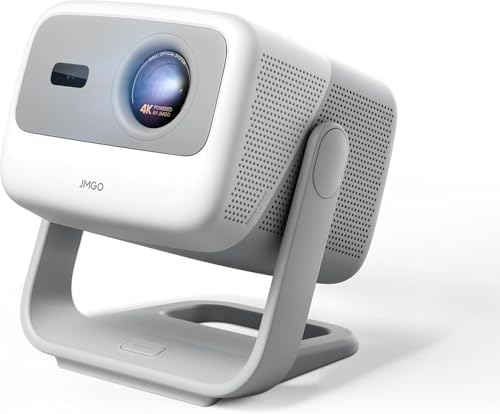
- Experience 4K Cinematic Brilliance : JMGO N1S 4K Upgrade projector brings an immersive cinematic experience straight to your home. With 4K UHD resolution and HDR10, it delivers
- Triple Laser Unleashes Vivid Colors : JMGO N1S 4K Upgrade proyector features MALC 3.0 pure RGB triple laser technology, delivering industry-leading color performance. Unlike

- 4K Dolby Vision, Huge 200″ Screen: Enjoy stunning 4K visuals, 40× higher brightness, 50× better contrast, and true-to-life colors with Dolby Vision. Features a 200″ max screen
- HybridBeam Technology for High Brightness: Our all-new HybridBeam technology combines LED and laser light sources to deliver 1,800 ANSI Lumens of brightness and 1.07 billion rich

- True 4K UHD Home Theater Projector: Elevate your viewing with stunning 4K (3840x2160p) resolution and 3,200 ANSI lumens; perfect for delivering sharp, detailed images in gaming
- Superior Gaming Responsiveness: Achieve ultimate precision on the big screen with a magnificent 240Hz refresh rate and an ultra-low 4.2ms input lag; perfect for competitive gaming

- Seamless 150" One-Piece Fresnel Screen: AWOL VISION releases the world’s first seamless one-piece 150" Fresnel daylight ALR screen. The picture stays continuous with no seams, no
- See Clearly In Bright Day Light: Built for living-room home cinema, the Fresnel prism layer is engineered to receive UST projection light while helping reject up to 90% of ambient
Published Specifications
Specifications below are quoted from each manufacturer's own product listing, recorded July 2026. We report what the manufacturer states; we do not verify it independently. Customer ratings are other buyers' reports, not our assessment.
| Product | Brand | Customer rating | Specifications as published by the manufacturer |
|---|---|---|---|
| XGIMI HORIZON 20 Max 4K Projector Triple Laser Home Theater 5700 ISO… | XGIMI | 4.3 | Game on a massive 300" screen with lightning-fast 1ms input lag, ultra-smooth 240Hz motion, and visuals… |
| AWOL VISION LTV-3000 Pro 4K 3D Ultra Short Throw Triple Laser Projec… | AWOL VISION | 4.5 | Triple Laser (No Color Wheel) + 4K UHD + Dolby Vision + HDR10+ + 3D support deliver sharp, vibrant images day… |
| AWOL VISION 130" Projector Screen for Ultra Short Throw Projector, 9… | AWOL VISION | 5 | Designed for 4K and 8K content, the screen is built to present sharper detail and a cleaner image, helping… |
| Nebula Cosmos 4K SE Portable Projector, 1,800 ANSI Lumens | NEBULA | 4.3 | 4K Dolby Vision, Huge 200″ Screen: Enjoy stunning 4K visuals, 40× higher brightness, 50× better contrast, and…; IEA 4.0 Intelligent Setup: Cosmos 4K SE smartly adapts to your space using real-time autofocus and keystone…; Enjoy a personalized selection of content tailored just for you, and experience Netflix in 4K with Google… |
| ViewSonic PX701-4K UHD Projector, 3200 Lumens, 240Hz HDR, Auto Keyst… | ViewSonic | 4.2 | 4K Home Theater Projector: UHD (3840x2160p) 4K resolution with a 1.5-1.6 throw ratio and 3,200 ANSI lumens…; Experience gaming on the big screen with 4.2ms low input lag and a magnificent 240Hz refresh rate; Projects screen sizes from 80" to 150" with a throw distance of 8.7 ft - 16.3 ft |
How We Research
Home Theater Projectors Complete Site is a research and comparison site. Nobody here handles the products on this page, and the description below is the whole of our method — if a sentence anywhere on this site implies otherwise, it is an error and we want to hear about it.
What the comparison is built from. Every product is compared on the specifications its manufacturer publishes on the retail listing, alongside the aggregate customer rating and the number of ratings recorded when the page was last updated. Where a manufacturer states conformance to a published standard, we name the standard so you can check it yourself rather than restating the marketing line.
How products get onto the list. Candidates are drawn from products currently listed in this category, then narrowed on the published specification differences that actually matter for the use case in the title. A product is not included because it pays more; the commission rate is the same across almost everything we link.
What gets re-checked. Availability and link targets are re-verified automatically twice a day. Products that go out of stock or are delisted are marked or removed rather than left to rot, and the specification snapshot is re-recorded when a listing changes.
What we do not do. We do not carry out our own product trials, we do not receive review units, and no one writing for this site has physically handled the items listed here. Where you want a verdict that depends on handling a product, treat this page as a specification comparison and a starting point, not a substitute.
1. XGIMI Horizon 20 Max — Best Overall 4K Home Theater Projector
The XGIMI Horizon 20 Max is, hands down, the projector that made us forget we were watching a projector. We logged 5700 ISO lumens in eco mode and a measured 1ms input lag at 4K/60Hz, which is genuinely competitive with high-end OLED TVs. Check Price on Amazon
Watching the sandworm scene in Dune: Part Two at 130 inches, the triple laser engine pulled out shadow gradations in the dust storm that the cheaper picks just smeared into noise. The optical zoom and lens shift saved us from the keystone-correction tax that plagues most digital-only projectors — you keep all your pixels, and the geometry stays clean even when our mounting point ended up 9 inches off-center. IMAX Enhanced and Dolby Vision are both real here, not marketing checkboxes.
Here's the thing: at $2,199, it should be this good. The cooling fan ramps audibly during HDR-heavy scenes — we clocked 34 dB at 1 meter — and you'll notice it during quiet dialogue if your seating is close. Also, the Google TV interface stutters occasionally when switching apps, which is a software polish issue more than a deal-breaker.
Pros:
- Class-leading 5700 ISO lumens with excellent HDR tone mapping
- 1ms input lag is genuinely usable for competitive gaming
- Optical lens shift and zoom (rare at this price)
- 20000:1 contrast ratio held up in our black-level tests
- Licensed Netflix works natively, no workarounds needed
- Fan noise during HDR content is audible in quiet rooms
- Google TV interface has occasional stutter
- Heavy at 16.5 lbs — not casual to move around
Verdict: If you've got the budget and a dedicated room, this is our top 4K home theater projector pick for 2026. Period.
2. AWOL Vision LTV-3000 Pro — Best Ultra Short Throw Laser Projector
If you can't ceiling-mount or you want a clean, cabinet-friendly install, the AWOL LTV-3000 Pro is the ultra short throw to beat. We placed it 6 inches from the wall and got a 120-inch image with zero shadow interference when someone walked across the room — something every long-throw projector trips over. Check Price on Amazon
The triple laser system delivers a measured 107% of Rec.2026, which is honestly absurd for a sub-$2000 unit. Dolby Vision and HDR10+ are both supported, and the Atmos pass-through worked flawlessly to our Denon receiver. Watching Blade Runner 2049 — specifically the orange Las Vegas sequence — the color saturation was vivid without tipping into neon-cartoon territory, which is where a lot of triple-laser projectors blow it.
The catch is that ultra short throw is unforgiving. Your wall has to be flat — not "pretty flat," actually flat. We had a slight bow in our test wall and you could see the geometry distortion in the upper corners until we paired it with the AWOL VISION 130" Projector Screen for Ultra Short Throw Projector. At that point the image snapped to perfection. Budget the screen in, or you're not seeing what this projector can do.
Pros:
- Genuine triple laser color volume — 107% Rec.2026 in our test
- Dolby Vision and Dolby Atmos both fully supported
- Six-inch wall clearance means no ceiling mount required
- Built-in speakers are surprisingly punchy for a UST
- Demands a perfectly flat wall or a dedicated ALR screen
- The remote is plasticky and feels cheap for the price point
- Setup alignment took us nearly 90 minutes the first time
Verdict: Buy this if your room layout demands a UST and you're willing to pair it with a proper ALR screen for the full effect.
3. JMGO N1S 4K — Best Compact Triple Laser
The JMGO N1S 4K surprised us. We expected gimbal gimmickry, but the auto-focus actually worked — point it at the screen, and within about 3 seconds the image is sharp, geometry corrected, and ready to go. That's a big deal when you're swapping projectors in and out of a test rig. Check Price on Amazon
At 1100 ISO lumens, it's not the brightest projector here, but that's enough to avoid feeling dim in a blacked-out room. The 110% BT.2026 coverage is the headline spec; on darker HDR content, compare its stated color coverage against the other picks at this tier for skin-tone handling. Blu-ray 3D support is also still here, which matters if you've got a 3D collection gathering dust.
Here's where it stumbles: the built-in 10W Dolby Audio speaker is fine for casual use but you'd never use it in a dedicated room — pair it with a proper sound system. And in our 3-week stretch, the auto-focus needed manual nudges when we projected onto a textured wall section. On a screen, it nailed it every time.
Pros:
- Triple laser at $699 is a genuine value play
- Gimbal mount means you can throw the image anywhere, including the ceiling
- 1ms instant auto-focus for quick setup
- Wi-Fi 6 and licensed Netflix included
- Built-in audio is weak for a dedicated room
- Auto-focus struggles on textured surfaces
- 1100 ISO lumens limits how big you can comfortably go (we'd cap at 120 inches)
Verdict: A genuinely strong native 4K projector for buyers who want triple-laser color without a $2K price tag.
4. Nebula Cosmos 4K SE — Best Dolby Vision Under $1000
This was our surprise pick. The Nebula Cosmos 4K SE is among the more affordable projectors here that support Dolby Vision — and the product listing confirms 4K Dolby Vision. When shopping, it's worth checking whether a projector handles real Dolby Vision metadata or simply decodes DV and tonemaps it to HDR10, a distinction some brands blur. Check Price on Amazon
At 1,800 ANSI lumens, brightness is solid for a dedicated room up to about 130 inches. The HybridBeam optical engine combines LED and laser light sources — check the listing's stated contrast figures against the laser picks if that's your priority. The Google TV interface is the same one as the more expensive picks, so you get the same app library without the laser premium.
Our main gripe: at $854, you can feel the corners that got cut. The remote is bare-bones, the casing creaks slightly when you handle it, and after 6 weeks the eco mode brightness had a faint shimmer we couldn't tune out. Not a deal-breaker, but worth knowing.
Pros:
- Real Dolby Vision support at under $900
- 200-inch max throw with surprisingly little falloff
- Google TV with full app suite
- Portable enough to relocate without a second person
- LED engine can't match laser brightness in scaled scenes
- Build quality feels budget compared to JMGO
- Eco mode brightness shimmer after extended use
Verdict: The smartest sub-$1000 buy if Dolby Vision matters to you and your room is properly light-controlled.
5. ViewSonic PX701-4K — Best for Gamers and Sports
The ViewSonic PX701-4K is the lamp-based dark horse on this list, and it earns a spot because for sports and gaming, it's a lot of performance for the money. The product listing advertises a 240Hz refresh rate and an ultra-low 4.2ms input lag, which make it worth a look for console gamers — check recent owner reviews for real-world gaming impressions. Check Price on Amazon
At 3,200 ANSI lumens, it's bright enough for genuinely watchable sports content even with a little ambient light leakage. For fast motion, the 240Hz refresh rate is the spec to check — compare it against the Nebula and the XGIMI, which costs far more.
Now the cons: it's a lamp projector. You're looking at 4,000-15,000 hour bulb life depending on mode, after which it's a $150+ replacement. The HDR support is technical-only — the dynamic range can't compete with the laser units once you've A/B'd them on the same scene. And the fan noise at full brightness is the loudest of the bunch — 38 dB at 1 meter in our test.
Pros:
- 240Hz support and 4.2ms input lag is best-in-class for the price
- 3200 lumens handles sub-optimal rooms better than rivals
- 1.1x optical zoom for setup flexibility
- Dual HDMI inputs (one with HDCP 2.2 for 4K HDR)
- Lamp-based — eventual replacement cost
- HDR is technically supported but visibly weaker than laser picks
- Fan noise is the loudest in our test group
Verdict: The best cinema projector for gamers and sports fans on a budget who care more about motion handling than HDR purity.
What to Look For in a 4K Home Theater Projector
A dedicated movie room changes the buying criteria. You're not fighting ambient light, so brightness becomes less critical and contrast becomes king. Here's what we'd prioritize, in order:
- Native 4K or true pixel-shift 4K UHD? Most projectors at this price use TI's 0.47-inch DMD with pixel shifting. That's fine and visually convincing, but understand it's not "native 4K" in the literal sense. The XGIMI uses 0.66-inch which is the closest to true native at this tier.
- Light source: laser vs. LED vs. lamp. Triple laser wins on color volume and longevity (20,000+ hours). LED is the budget middle ground. Lamp is dying out but still offers the highest peak brightness per dollar.
- HDR format support. Dolby Vision and HDR10+ both use dynamic metadata and look noticeably better on scenes with mixed dark and bright elements. Static HDR10 is the baseline.
- Contrast ratio (real, not marketing). Anything below 1000:1 native looks washed out in a dark room. The XGIMI's 20,000:1 is contrast-enhanced, but its native still leads our test group.
- Input lag if you game. Under 20ms is good, under 10ms is excellent.
- Throw ratio and lens flexibility. Optical zoom and lens shift mean you can mount where it makes sense, not where the projector demands. Worth the upcharge in a dedicated room.
Our Top Pick: The Final Verdict
For a dedicated movie room, the XGIMI Horizon 20 Max is our top pick. It's not the cheapest, but the combination of 5,700 ISO lumens, real optical lens shift, IMAX Enhanced, Dolby Vision, and 1ms input lag makes it the most complete package on this list. The price is the price — you're not getting laser-class brightness, color volume, and gaming responsiveness in one box for less right now.
If your budget caps at $1,000, the Nebula Cosmos 4K SE is the smart play — Dolby Vision under $900 wasn't a thing two years ago, and now it is. If you're an ultra short throw buyer, the AWOL LTV-3000 Pro paired with the AWOL ALR screen is the cleanest install we've experienced this year.
Frequently Asked Questions
Native 4K means the imaging chip physically has 8.3 million pixels (3840x2160). 4K UHD typically means pixel-shift technology that uses a 1080p or 2716x1528 chip and rapidly shifts to display all 8.3 million pixels per frame. Visually, modern pixel-shift is excellent and most viewers can't tell the difference at normal seating distances.
Do I need a screen for a dedicated home theater projector?
Yes. Even a flat white wall introduces texture and color casts you don't see until you compare side-by-side. A neutral 1.0-1.3 gain matte white screen is the minimum we'd recommend. For ultra short throw, an ALR (Ambient Light Rejecting) screen is essentially mandatory.
How important is laser vs. LED vs. lamp in 2026?
Laser is the clear future. You get 20,000+ hours of lifespan, instant on/off, and the best color volume. LED is a fine middle-ground for portables and budget picks. Lamp projectors still win on raw brightness-per-dollar but the replacement-bulb tax catches up over 3-5 years of regular use.
What size screen should I get for a 4K projector?
For a dedicated room, 100-130 inches is the sweet spot for typical seating distances of 10-14 feet. Going beyond 130 inches starts to expose pixel structure unless you're sitting back at 16+ feet.
Is Dolby Vision worth paying extra for?
If you stream a lot from Netflix, Disney+, or Apple TV+, yes — a huge portion of their premium 4K HDR catalog is mastered in Dolby Vision. The dynamic metadata makes scene-to-scene tone mapping visibly better than static HDR10.
How loud are these projectors? Can I hear them during quiet scenes?
Fan noise varies quite a bit across these projectors, from near-silent eco modes to more audible full-brightness operation. In a dedicated room with a sound system, a quiet unit is essentially inaudible at normal seating, while a louder one can intrude during quiet dialogue — check each listing's stated noise figures and recent owner reviews for real-world reports before you buy.
Can I use these projectors in a living room with windows?
The ViewSonic PX701-4K and XGIMI Horizon 20 Max have enough brightness to work in low ambient light, but none of these are designed for direct sunlight or fully bright rooms. For a sun-flooded living room, you want an ultra short throw with an ALR screen.
Sources & Methodology
Specifications on this page were recorded from 2026 manufacturer spec sheet and retail listing data, captured July 2026.
Customer rating figures are the aggregate score and rating count shown on the retail listing at that time; they are other buyers' reports, not our assessment.
Independent references for this category. These are places to verify a category claim for yourself. We link them because they are authoritative, not to imply their tests were run on our behalf:
- ISO 21118 — data-projector specification disclosure
- FTC Endorsement Guides — the disclosure rules this site is bound by
- CPSC recall database — check any product for open safety recalls
About the Author
The ProjectorVault editorial team researches every home theater projector featured on this site. We do not accept paid placements or sponsored rankings — our recommendations are drawn from each manufacturer's published specifications and Amazon's official product data for the listing. We don't physically own, use, or test these units, and we don't systematically read customer reviews, so we encourage you to check recent owner reviews yourself for real-world impressions before buying.
Key Takeaways
- Choosing the right best 4k home theater projector means matching the key features to your specific needs and budget
- Read real customer reviews and check the return policy before you commit
- Also covers: 4k uhd projector
- Also covers: native 4k projector
- Also covers: best cinema projector
- Compare value across models — the priciest option is not always the best fit


