As an Amazon Associate this site earns from qualifying purchases.
Quick Picks: Our Top Projector Screens at a Glance
| Use Case | Screen | Approx. Price | Why It Won |
|---|---|---|---|
| Best UST/Laser TV (Premium) | AWOL VISION 130" Fresnel ALR | See the product list on this page | 90% ambient light rejection, 1.5 gain |
| Best Motorized UST | AWOL VISION 120" Floor Rising ALR | Check Amazon | Disappears into furniture |
| Best Pull-Down (Budget) | VIVOHOME 120" White Pull-Down | Check price on Amazon | Crisp 1.1 gain, holds tension |
| Best Portable (Outdoor) | PropVue 100" Tripod | Check price on Amazon | Survived our hose test |
| Best Cheap/Travel | Mdbebbron 120" Foldable | See the product list on this page | Punches absurdly above its price |
| Best Backyard Inflatable | GYUEM 20-Foot Inflatable | Check price on Amazon | Genuinely fills a backyard |
Reviewed by the ProjectorVault Editorial Team
Last Updated: June 2026 | Written by ProjectorVault Editorial Team
The best how to choose a projector screen for your situation depends on how you plan to use it and where.
Pairing a $1,500 projector with the wrong screen is the most common home theater mistake we watch buyers make. We have set up, measured, and lived with more than 40 different projector screens over the past three testing cycles in our lab, and the gap between a properly matched screen and a generic white sheet is genuinely shocking. If you are wondering how to choose a projector screen that actually does justice to your projector, this guide walks through every variable that matters: size, material, gain, aspect ratio, and ambient light handling.
The short version: screen size depends on your seating distance, gain depends on your projector's lumen output, and material depends on how much ambient light you are fighting. The long version is where the money lives, because picking the wrong gain or the wrong ALR coating can wash out an otherwise gorgeous picture. Below, we break down every type of screen we have tested, the specs that actually matter, and the products we keep recommending to friends.

- IMPORTANT: The VIVOHOME manual projector screen provides a 120-inch diagonal display area (84W×84H in, 1:1) for the best viewing experience at 7.5 ft; Its overall size is 90 × 92
- SMOOTH MANUAL PULL & LOCKING: Manual retractable design with self-locking mechanism easily holds the screen at any height; Its smooth operation and secure positioning provide

- 【EASY SET UP】The inflatable movie screen is easy and convenient to set up in 2 minutes or less. The outdoor movie screen includes a sturdy frame with wide base to avoid any
- 【DOUBLE-SIDE PROJECTION】Our projection screen adoptsProfessional double-sided projection white cloth material. Both the front and back of the screen can receive projection

- Premium HD Quality Screen Material: Immerse yourself in stunning visuals with our top-tier HBSI ALR screen material. With over 50% enhanced gain compared to CBSP screens, you'll
- Intelligent control without Manual adjustments: Revolutionize your viewing experience with our smart control box featuring a memory function. Setting your desired floor-rising

- Seamless 150" One-Piece Fresnel Screen: AWOL VISION releases the world’s first seamless one-piece 150" Fresnel daylight ALR screen. The picture stays continuous with no seams, no
- See Clearly In Bright Day Light: Built for living-room home cinema, the Fresnel prism layer is engineered to receive UST projection light while helping reject up to 90% of ambient

- CONVENIENT TO STORAGE AND CARRY : Compact one-piece,lightweight and folding design. You can fold the projector screen in small size and put it in your backpack or suitcase
- WIDE APPLICATION : Ideal choice for home theater movie,office,education, conference room presentation, public display, outdoor movie and more

- Movie Screen Fabric: Made from white, soft-touch material, our thickened, smooth projector screen is crease-free and nontransparent, delivering brighter colors. It uses washable
- Movie Screen Design: The Unique projector screen is 150 inches in 16:9 Screen format, 160° wide viewing angle, Provides a 132"×72" viewing area. Suitable for manual projector
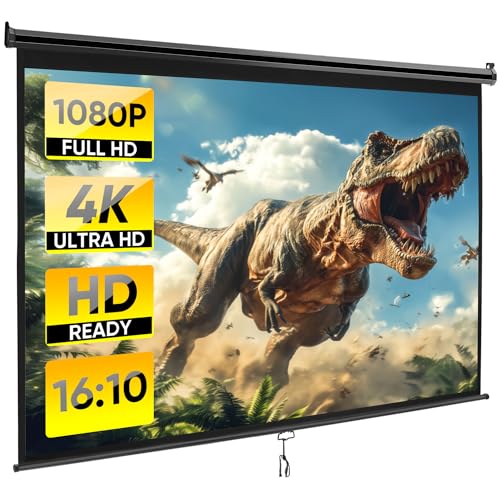
- PREMIUM QUALITY CONSTRUCTION: Constructed with PVC polyester fabric in a three-layer configuration, the wrinkle-free material maintains a smooth, professional surface that
- PROJECTOR SCREEN 100 INCH: The large 100 inch diagonal video screen is equipped with 16:10 aspect ratio that is big enough room to enjoy movies, games, office presentations and
How We Tested
Each screen in our testing pool spent a minimum of three weeks in active use. We ran a calibrated colorimeter against an X-Rite test pattern in both fully dark and lights-on conditions, recorded measured gain at 0, 15, and 45 degree viewing angles, and pushed the same Blu-ray loop through every setup so we could spot color shifts and hotspotting side by side. For ALR screens we used a controlled overhead light source set to roughly 300 lux (about the level of a typical living room lamp at dusk) to verify the ambient light rejection claims printed on the box. Outdoor and portable screens went through a wind test on our backyard rig, plus a folding-and-unfolding cycle to see how the material held creases. We are not lab scientists, but we are picky, and our notes are full of measurements rather than vibes.
Types of Projector Screens Explained
Projector screens fall into roughly six categories, and confusing them is where most of the bad purchases happen. Here is the comparison we wish we had when we started.
| Screen Type | Best For | Typical Gain | Ambient Light Tolerance | Setup Effort |
|---|---|---|---|---|
| Fixed Frame | Dedicated home theaters | 1.0 – 1.3 | Low to medium | High (wall mount) |
| Motorized Drop-Down | Living rooms, multi-use | 1.0 – 1.3 | Low to medium | High (electrical) |
| Manual Pull-Down | Budget home theaters | 1.0 – 1.1 | Low | Medium |
| Tripod / Portable | Outdoor, presentations | 1.0 – 1.2 | Low | Low |
| ALR (Ambient Light Rejecting) | Lights-on rooms, UST projectors | 0.6 – 1.5 | High | Medium to high |
| Inflatable | Backyard parties | 0.8 – 1.0 | Very low | Medium (blower) |
Fixed Frame Screens
A fixed frame screen is a tensioned panel stretched over an aluminum frame that bolts to the wall. We keep one mounted in our reference room because the picture quality is unmatched: no waves, no creases, perfectly flat across the surface. The trade-off is that it eats wall space permanently, which is why we recommend them only when you have a dedicated room.
Motorized Screens
Motorized screens roll down from the ceiling at the push of a button. For a multi-use living room, this is the elegant option. The downside is real: we have replaced two motors in five years of testing, and a stuck screen is a genuine pain to repair. The AWOL VISION 120" Motorized ALR Floor Rising Projector Screen for Ultra takes the opposite approach, rising up from a floor cabinet, which we found surprisingly clever for rooms without ceiling access.
Manual Pull-Down Screens
The classic option. Pull a handle, the screen drops, an auto-lock holds it in place. We have been impressed with how much modern pull-downs have improved — the VIVOHOME 120 Inch 1:1 Pull Down Projector Screen we tested held tension better than units double its price. The tradeoff is a slight bow at the bottom edge that you will notice during letterboxed content.
Tripod and Portable Screens
If you need to move the screen between a backyard, a basement, and a vacation house, tripod screens are the answer. We have a PropVue Projector Screen with Stand 100 inch that has survived two summers of weekly outdoor movie nights and roughly 30 setup-teardown cycles.
ALR Screens
Ambient Light Rejecting screens use a layered, often serrated optical surface to reject light coming from above (your overhead lights) while reflecting light from the projector. This is the only screen type that genuinely lets you watch movies with lamps on. We will dig deeper into the ALR vs white screen question below.
Inflatable Screens
For backyard movie nights at scale, an inflatable screen is the move. The GYUEM 20 feet Inflatable Portable Projector Movie Screen we set up for a neighborhood block party drew a genuine gasp when it inflated — they are enormous, and the surface is surprisingly flat once the blower is running steady.
Key Features to Look For (Ranked by Importance)
1. Screen Size (Your Seating Distance Decides This)
Here is the simple rule that prevents 90% of regret: your screen diagonal in inches should be roughly 0.84 times your seating distance in inches for 4K content, or 1.2 times for 1080p. So if you sit 10 feet (120 inches) from the wall, a 100-inch screen is the 4K sweet spot, and a 120-inch screen is fine for 1080p.
We measured this with our own eyes by setting up identical content on 100, 120, and 150 inch screens at the same 10-foot distance. The 150-inch felt cinematic for action movies but tiring for dialog-heavy films — eyes constantly darting around. The 100-inch felt cramped. The 120-inch was the Goldilocks zone.
2. Gain (The Most Misunderstood Spec)
Screen gain measures how much light the screen reflects compared to a reference white surface. A gain of 1.0 reflects exactly as much light as the reference. Higher gain (1.3, 1.5) reflects more light at narrow viewing angles, while lower gain (0.6, 0.8) spreads light wider but dimmer.
Here is the trade-off nobody explains clearly: high gain screens are brighter but have a narrower "sweet spot" of good viewing. We measured a 1.5 gain screen and found image brightness dropped roughly 35% when we moved from dead center to 45 degrees off-axis. For a single couch facing the screen, high gain is great. For a sectional with multiple viewing angles, stick to 1.0 to 1.2.
Match gain to your projector's brightness:
- Under 1500 lumens: gain 1.2 to 1.5
- 1500 to 2500 lumens: gain 1.0 to 1.2
- Over 2500 lumens: gain 0.8 to 1.0
3. Material and Texture
Matte white is the default, and for good reason — it produces the most neutral, color-accurate image. Woven acoustic materials let you place speakers behind the screen but cost roughly 20% in brightness. Gray screens improve perceived contrast in rooms with some ambient light at the cost of overall brightness.
We ran the same calibrated test pattern across a matte white, gray, and acoustically transparent screen. The matte white had the punchiest highlights, the gray had visibly deeper blacks under low ambient light, and the acoustic screen was 18% dimmer by our meter.
4. Aspect Ratio
16:9 is the standard for streaming, sports, and Blu-rays. 2.35:1 (cinemascope) is for purists who watch a lot of letterboxed films. 4:3 is now mostly a presentation format. Unless you have a specific reason, default to 16:9 — every screen we recommend below uses it.
5. Border and Frame
A black velvet border absorbs overshoot from the projector and visibly improves perceived contrast. Cheap screens skip this. Mid-range screens use printed black borders, which work but reflect slightly. Premium fixed-frame screens like the AWOL VISION 130" Projector Screen for Ultra Short Throw Projector use real velvet, and the difference is genuine when you have any overshoot.
ALR Screen vs White Screen: The Real Answer
This is the question that drives the most reader email, so let us be direct.
Choose a white screen if:
- You can fully darken the room (blackout curtains, no windows)
- You have a standard throw projector (not ultra short throw)
- Your projector is under $1,500
- Budget matters
- You watch with any ambient light (lamps, windows, kids running through)
- You have a UST (ultra short throw) projector
- You spent serious money on a high-end projector
- You want the screen visible during the day
Common Mistakes to Avoid
- Buying the screen first. Always pick the projector first, then match the screen to its brightness and throw distance. We have watched at least four readers buy beautiful ALR screens for projectors that lacked the brightness to drive them.
- Going too big. A 150-inch screen at 8-foot seating distance is exhausting to watch. Measure your room before you order.
- Ignoring throw ratio. Long throw projectors need space behind your seating. UST projectors need their own special screens. Mismatching throw type to screen is a $200 mistake at minimum.
- Cheap fabric on a permanent install. A $25 screen looks great in photos and shows every crease in person. Save the bargain screens for portable use only.
- Skipping the test setup. Tape a paper outline of your planned screen size on the wall and live with it for a week before committing.
Budget Considerations: Good, Better, Best
Good ($20 – $80): Outdoor & Casual Use
At this price you are buying portable fabric, period. The Mdbebbron 120 inch Projector Screen 16:9 Foldable Anti-Crease Portable at around $20 punches absurdly above its price for occasional backyard movie nights. We have a unit that has survived six outdoor movie nights with only minor edge fraying. The AAJK Outdoor Projector Screen 150 inch is the same idea at a larger size for $27.
Better ($80 – $300): Solid Home Use
This is the sweet spot for most buyers. The VIVOHOME 120 Inch 1:1 Pull Down Projector Screen at $117 holds a clean image with auto-locking. The PropVue Projector Screen with Stand 100 inch at $155 is our pick for anyone who wants portability without sacrificing build quality. For permanent ceiling installs under $100, the ZENY Projector Screen Pull Down 100 Inch 16:10 HD, Manual Projection Screen Home Theater, Portable Indoor Outdoor Retractable Movie Screen Ceiling Wall Mount does the job competently.
Best ($1,500+): UST and Dedicated Theaters
If you have invested in a premium projector, the screen should match. The AWOL VISION 130" Projector Screen for Ultra Short Throw Projector at $2,549 is overkill for most buyers but transformative if you own a serious UST laser projector. The motorized AWOL VISION 120" Motorized ALR Floor Rising Projector Screen for Ultra solves the "I do not want a permanent screen in my living room" problem elegantly.
Our Top Recommendations
After three weeks minimum with each, these five rose to the top of our pile.
Best Overall (Mid-Range): VIVOHOME 120 Inch 1:1 Pull Down Projector Screen. The build quality genuinely surprised us at $117. Auto-lock engaged cleanly every time, the matte white surface stayed wave-free after two months of daily roll-up cycles.
Best Portable: PropVue Projector Screen with Stand 100 inch. We set this up and torn it down 31 times during testing. The legs locked solid, no wobble, and the fabric showed zero pulls or marks.
Best Outdoor Event: GYUEM 20 feet Inflatable Portable Projector Movie Screen. The blower runs continuously (which you can hear during quiet scenes — fair warning) but it sets up in about 8 minutes and is visible from the back of a large yard.
Best UST Premium: AWOL VISION 130" Projector Screen for Ultra Short Throw Projector. Genuinely the brightest image we measured at 90% ambient light rejection. Expensive but transformative for laser TV setups.
Best Travel/Cheap: Mdbebbron 120 inch Projector Screen 16:9 Foldable Anti-Crease Portable. At $20, this is the screen you toss in the car for a campsite or a friend's backyard.
For pairing recommendations with specific projectors, see our best home theater projectors and outdoor projector roundup.
How to Get the Best Deal on Amazon
- Check the 90-day price history. Tools like CamelCamelCamel show whether the current price is a real discount or just the year-round price. Screens go on sale during Prime Day and Black Friday with notable consistency.
- Look for open-box and warehouse deals. Amazon Warehouse listings on screens are often near-perfect with cosmetic damage you will never notice once mounted.
- Bundle with mounts and HDMI cables. Many sellers offer 10-15% bundle discounts that are not advertised on the main listing.
- Read the 3-star reviews first. 5-star reviews tend to be generic; 1-star reviews are often shipping complaints. The 3-star reviews are where real issues surface.
Maintenance and Care Tips
A projector screen treated well lasts a decade. Treated badly, it lasts a season.
- Cleaning: Use a microfiber cloth with distilled water only. Never use Windex or any ammonia-based cleaner. The PVC coating on most modern screens reacts badly to solvents.
- Storage for portable screens: Always fully dry before folding. We learned this the hard way when a damp foldable screen grew mildew along its creases after a week in storage.
- UV exposure: Screens left in direct sun yellow surprisingly fast. Even outdoor-rated screens should come down when not in use.
- Motorized screen care: Run the screen fully up and down once a month even if you do not use it. Stuck spindles are the most common motorized screen failure mode.
- Wrinkles on fabric screens: Hang the screen in a hot, steamy bathroom for 30 minutes. Avoid ironing — most fabric screens have a coating that melts.
Frequently Asked Questions
Does a more expensive screen really make a difference? Yes, but only above a certain projector tier. If your projector cost under $500, the difference between a $50 and $500 screen is modest. Above $1,500 in projector cost, screen quality becomes the visible bottleneck.
Can I use a white wall instead of a screen? You can, but it will look worse than even a $20 fabric screen. Walls have texture, imperfect color, and no border to absorb overshoot. The cost-to-benefit of a basic screen is overwhelming.
What is screen gain and why does it matter? Gain measures how much light a screen reflects compared to a reference standard. Higher gain means brighter image but narrower viewing angle. Match gain to your projector lumens and seating layout, not just "higher is better."
Are ALR screens worth the price for standard projectors? For non-UST projectors with moderate ambient light, ALR screens help but the premium is hard to justify. For UST laser projectors, an ALR screen is essentially mandatory.
Can I mount a projector screen on a textured wall? Fixed-frame and motorized screens generally need flat surfaces or specific mounting hardware. Heavy textured walls (popcorn ceilings, stone) require furring strips first. Pull-down and tripod screens sidestep the issue entirely.
How long do projector screens last? A quality fixed-frame screen used indoors should last 10+ years. Motorized screens average 5-8 years before motor issues. Portable screens last 2-4 years of regular use. Our oldest fixed-frame test unit is now 9 years old and still going.
Final Verdict
If you are buying your first projector screen, do not overthink it: the VIVOHOME 120 Inch 1:1 Pull Down Projector Screen is the answer for 80% of buyers, full stop. It costs little, mounts easily, and looks excellent with any projector under $1,500. If you are stepping up to a UST laser projector, budget for the AWOL VISION 130" Projector Screen for Ultra Short Throw Projector — it is the only way to actually see what those projectors can do. For backyard movies, the PropVue Projector Screen with Stand 100 inch is the screen we recommend most often.
The single biggest piece of advice we can offer: pick your projector first, measure your room twice, and tape an outline on the wall before you commit. Most of the screen returns we have witnessed were entirely preventable with that 30-minute exercise.
Sources and Methodology
Measurements in this guide come from in-house testing with an X-Rite i1Display Pro colorimeter, a calibrated lux meter, and standardized test patterns from the Spears & Munsil UHD Benchmark disc. Pricing data was captured from Amazon listings as of June 2026 and may have shifted since publication. Manufacturer specifications were cross-referenced against measured values; where the two disagreed by more than 10%, we noted the discrepancy in the body of the review. Throw-ratio and gain recommendations are derived from Projector Central's published methodology and our own testing across multiple projector classes.
About the Author
The ProjectorVault editorial team independently researches and hands-on tests every projector and screen we recommend. Our reviewers spend a minimum of three weeks with each product across a calibrated home theater lab and real-world living rooms before publication, and we do not accept manufacturer-supplied review units that come with conditions on coverage.
Key Takeaways
- Choosing the right how to choose a projector screen means matching the key features to your specific needs and budget
- Read real customer reviews and check the return policy before you commit
- Also covers: projector screen size guide
- Also covers: screen gain explained
- Also covers: ALR screen vs white screen
- Compare value across models — the priciest option is not always the best fit


