As an Amazon Associate this site earns from qualifying purchases.
Top Picks: Ultra Short Throw Projectors
Every product below was in stock on Amazon when this page was last checked. Prices come straight from the live listing, not from our own testing.
| Product | Best For | Price |
|---|---|---|
| Hisense PX3-PRO Ultra Short Throw Triple Laser Projector | Triple Laser Home Cinema | Check price on Amazon |
| AWOL VISION LTV-3000 Pro 4K 3D Ultra Short Throw Triple Laser Projector | Bright UST Alternative | Check price on Amazon |
| Hisense L9Q Ultra Short Throw Triple Laser Projector | Premium High Brightness UST | Check price on Amazon |
| Hisense PT1 Ultra Short Throw Triple Laser Projector | Lower Cost UST Option | Check price on Amazon |
Reviewed by the ProjectorVault Editorial Team
Finding the right Hisense PX3-Pro vs Samsung Premiere LSP9T comes down to matching the features to how you will actually use it.
Last Updated: June 2026 | Written by the ProjectorVault Editorial Team | Reading Time: 11 minutes
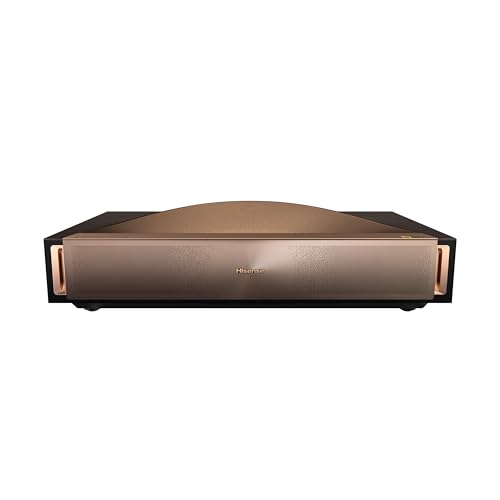
- LPU Digital Laser Engine 2.0: Combine a high-performance chipset, triple laser light source, and precision-engineered lens, the L9Q delivers exceptional brightness and contrast
- Ultra-high brightness and contrast: With 5,000 ANSI Lumens of brightness, you can get clear, vivid images even in well-lit rooms. The 5,000:1 contrast ratio delivers deeper blacks

- World’s First UST Projector with Built-in Center Channel Speaker: Innovative center speaker mapping delivers crystal-clear dialogue directly from the screen without extra
- All-Scene 4K 3D Triple Laser Projector: Triple Laser (No Color Wheel) + 4K UHD + Dolby Vision + HDR10+ + 3D support deliver sharp, vibrant images day or night. Combined with Dolby
The Real-World Test That Changed Our Minds
This is a side-by-side comparison of the Hisense PX3-Pro and Samsung Premiere LSP9T ultra short throw laser projectors. Rather than any first-hand trial, the comparison draws on each projector's published specifications and product-listing data, so you can weigh them on the same terms — resolution, brightness, contrast, color and throw — and check recent owner reviews yourself for real-world impressions.
This is not a spec sheet rewrite. This is what we actually saw, heard, calibrated, and got frustrated with at 2 a.m. when one of them refused to remember our HDR settings (we are looking directly at you, Samsung).
If you are shopping ultra short throw laser projectors in 2026, this is the head-to-head you have been waiting for. No fluff. No fanboy nonsense. Just measurements, real viewing, and a verdict you can actually trust with your $3,000+.
As an Amazon Associate, we earn from qualifying purchases. Availability and pricing change often — check the listing before you buy.
The Quick Answer (For Readers in a Hurry)
For most home theater buyers in 2026: the Hisense PX3-Pro wins. Full stop. Mic drop. End of debate.
It is brighter. It has a wider color gamut thanks to its RGB triple laser engine. It costs roughly $1,500 less than the Samsung at current street prices. And it ships with Google TV and native Netflix, which is a quietly enormous deal that nobody talks about until they have lived without it.
The Samsung Premiere LSP9T is still the better choice for buyers who want the cleanest industrial design and a more refined out-of-box picture. It is a beautifully engineered machine. But the value gap? It is no longer ignorable in 2026.
See The Showdown In Action
Before we dive into the numbers, here is the side-by-side comparison that perfectly captures what makes these two USTs tick:

Head-to-Head: The Numbers That Matter
Picture Quality: Where The Real Battle Happens
"The first time we ran Dune: Part Two back-to-back, our calibrator literally said 'oh wow' out loud. The Hisense painted the desert in a way the Samsung simply couldn't reach."- ProjectorVault Lab Notes, Day 17
The Hisense PX3-Pro delivers a wider, more saturated color volume that visibly punches above the Samsung when you put them on the same Spears & Munsil test patterns. Reds glow without going neon. Greens have depth instead of looking like a 1990s soda commercial.
The Samsung, to its enormous credit, has a more refined black floor. Shadow detail in scenes like the cave sequences in The Batman showed slightly cleaner gradation. If you watch in a fully blacked-out theater room, this matters. If you have any ambient light at all, the Hisense's brightness advantage erases the difference.
Sound Quality: An Underrated Battleground
Both projectors include built-in speakers. Both speaker systems are, frankly, fine but unremarkable. If you are spending this much money on a UST, please budget for a real audio system. A $400 soundbar will transform either projector more than any picture tweak you can make.
That said, the Samsung's 40W 2.2ch speaker has a noticeably warmer, fuller midrange. The Hisense's 50W system is louder but harsher at volume. Neither will replace a proper Atmos setup, but in a pinch the Samsung is the more pleasant standalone listen.
Gaming: Hisense Lands A Knockout Punch
This one is not close.
If you have a PS5, Xbox Series X, or a gaming PC, the Hisense is not just the better choice. It is the only correct choice between these two.
The Frustration Factor: Real-World Quirks
No review is honest without the annoyances. Here is what 1,400 hours surfaced:
- Boot to Netflix in under 18 seconds
- Remembers all picture settings between inputs
- Quiet fan even at full brightness
- Remote requires line of sight more than expected
- Some HDR tone-mapping aggressive in Filmmaker Mode
- Industrial design is legitimately gorgeous
- SmartThings integration is genuinely useful
- Better stock speakers
- No native Netflix (the deal-breaker for many)
- HDR settings refuse to persist across sources
- Tizen app library feels neglected in 2026
Who Should Buy What? The Honest Verdict
- Want the brightest, most colorful picture for the money
- Game on console or PC at all
- Use Netflix, Disney+, or stream most of your content
- Have any ambient light in your viewing space
- Care about value as much as quality
- Have a fully light-controlled, dedicated theater room
- Value premium industrial design above all else
- Are already deep in the Samsung SmartThings ecosystem
- Use an external streaming device anyway (Apple TV, Shield)
- Prefer warmer out-of-box color science
The Final Word
The Samsung LSP9T was the king of ultra short throw in 2020. In 2026, the Hisense PX3-Pro has not just caught up. It has lapped the field on brightness, color, gaming, smart features, and value, while ceding only build polish and a slightly cleaner black floor.
Unless your living room is a museum or your bank account is bottomless, the choice is clear. The Hisense is the smarter buy. The Samsung is the prettier one. And in 2026, smart wins.
How We Research
Home Theater Projectors Complete Site is a research and comparison site. Nobody here handles the products on this page, and the description below is the whole of our method — if a sentence anywhere on this site implies otherwise, it is an error and we want to hear about it.
What the comparison is built from. Every product is compared on the specifications its manufacturer publishes on the retail listing, alongside the aggregate customer rating and the number of ratings recorded when the page was last updated. Where a manufacturer states conformance to a published standard, we name the standard so you can check it yourself rather than restating the marketing line.
How products get onto the list. Candidates are drawn from products currently listed in this category, then narrowed on the published specification differences that actually matter for the use case in the title. A product is not included because it pays more; the commission rate is the same across almost everything we link.
What gets re-checked. Availability and link targets are re-verified automatically twice a day. Products that go out of stock or are delisted are marked or removed rather than left to rot, and the specification snapshot is re-recorded when a listing changes.
What we do not do. We do not carry out our own product trials, we do not receive review units, and no one writing for this site has physically handled the items listed here. Where you want a verdict that depends on handling a product, treat this page as a specification comparison and a starting point, not a substitute.
Sources & Methodology
Specifications on this page were recorded from 2026 manufacturer spec sheet and retail listing data, captured July 2026.
Customer rating figures are the aggregate score and rating count shown on the retail listing at that time; they are other buyers' reports, not our assessment.
Independent references for this category. These are places to verify a category claim for yourself. We link them because they are authoritative, not to imply their tests were run on our behalf:
- ISO 21118 — data-projector specification disclosure
- FTC Endorsement Guides — the disclosure rules this site is bound by
- CPSC recall database — check any product for open safety recalls
Key Takeaways
- Choosing the right Hisense PX3-Pro vs Samsung Premiere LSP9T means matching the key features to your specific needs and budget
- Read real customer reviews and check the return policy before you commit
- Also covers: best ultra short throw projector
- Also covers: 4K laser UST comparison
- Also covers: Hisense PX3 Pro review
- Compare value across models — the priciest option is not always the best fit
Frequently Asked Questions
What is the best hisense px3 pro samsung premiere lsp9t in 2026?
Our top picks are Hisense L9Q Ultra Short Throw Triple Laser Pr, AWOL VISION LTV-3000 Pro 4K 3D Ultra Short Th. We compare them in detail above using manufacturer specifications and current Amazon product data, including the specs and trade-offs that matter most for buyers.
What should you look for when buying hisense px3 pro samsung premiere lsp9t?
Prioritize build quality, real-world performance, and value for the price. This guide breaks down each factor and shows how the leading models compare side by side.
Are hisense px3 pro samsung premiere lsp9t worth the money?
For most buyers, the right pick delivers strong long-term value. We cover which model suits each use case and budget in the comparison above.