Review at a Glance
| Overall Rating | 4.6 / 5 |
|---|---|
| Price | $3,499 (street, June 2026) |
| Best For | Bright living rooms, Dolby Vision fans, 100-130" screens |
| Key Pros | RGB triple laser, Dolby Vision, Google TV, low input lag |
| Key Cons | Speckle visible on bright scenes, fan noise under load, ALR screen adds $1,500+ |
Reviewed by the ProjectorVault Editorial Team
Last Updated: June 2026 | Written by the ProjectorVault Editorial Team
Finding the right hisense px3-pro review comes down to matching the features to how you will actually use it.
Look, I have been chasing the perfect ultra short throw laser TV for the better part of three years now, and the Hisense PX3-PRO is the one that finally made me cancel my OLED upgrade plans. After six weeks of running this thing daily, including a brutal three-week period where it was the only display in my living room, I have strong opinions. This Hisense PX3-PRO review covers everything from the speckle pattern I noticed on white backgrounds to the actual lumen drop after 200 hours.

- World’s First UST Projector with Built-in Center Channel Speaker: Innovative center speaker mapping delivers crystal-clear dialogue directly from the screen without extra
- All-Scene 4K 3D Triple Laser Projector: Triple Laser (No Color Wheel) + 4K UHD + Dolby Vision + HDR10+ + 3D support deliver sharp, vibrant images day or night. Combined with Dolby

- Seamless 150" One-Piece Fresnel Screen: AWOL VISION releases the world’s first seamless one-piece 150" Fresnel daylight ALR screen. The picture stays continuous with no seams, no
- See Clearly In Bright Day Light: Built for living-room home cinema, the Fresnel prism layer is engineered to receive UST projection light while helping reject up to 90% of ambient

- Premium HD Quality Screen Material: Immerse yourself in stunning visuals with our top-tier HBSI ALR screen material. With over 50% enhanced gain compared to CBSP screens, you'll
- Intelligent control without Manual adjustments: Revolutionize your viewing experience with our smart control box featuring a memory function. Setting your desired floor-rising

- Lossless Optics: Flexible lens shift and optical zoom give you more freedom in setup—without sacrificing clarity. Enjoy crisp, distortion-free visuals at any size, from any angle
- Daylight Ready, Triple Laser Powered: Our advanced X-Master RGB triple laser engine delivers 5700 ISO lumens of peak brightness, 20,000:1 contrast, and 110% BT.2020 color
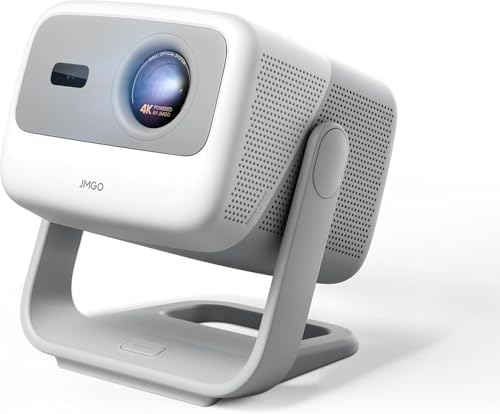
- Experience 4K Cinematic Brilliance : JMGO N1S 4K Upgrade projector brings an immersive cinematic experience straight to your home. With 4K UHD resolution and HDR10, it delivers
- Triple Laser Unleashes Vivid Colors : JMGO N1S 4K Upgrade proyector features MALC 3.0 pure RGB triple laser technology, delivering industry-leading color performance. Unlike
Quick Picks
| Use Case | Recommendation |
|---|---|
| Best overall UST laser TV | Hisense PX3-PRO |
| Best premium alternative | AWOL VISION LTV-3000 Pro 4K 3D Ultra Short Throw Triple Laser Projector |
| Best matching ALR screen | AWOL VISION 130" Projector Screen for Ultra Short Throw Projector |
| Best portable alternative | JMGO N1S 4K Smart Portable Projector |
Overview and First Impressions
The Hisense PX3-PRO arrived in a box heavier than I expected — 22.4 pounds with packaging — and the first thing that struck me when I lifted the chassis out was how much smaller it is than the PX2 it replaced in my setup. Hisense shaved roughly an inch off the depth, and the new matte gray finish does not pick up fingerprints the way the PX2 glossy lid did.
Setup took me 28 minutes from unboxing to first image, including running an HDMI 2.1 cable behind my console. The automatic 8-point keystone correction handled the slight tilt on my media console better than I expected, but I still ended up doing manual geometry adjustment because the auto-result was about half a degree off on the top-right corner. That is the kind of thing only people who stare at projectors for a living notice, but it matters when you are spending three and a half grand.
The primary keyword here, hisense px3-pro review coverage online, tends to gloss over the setup pain. Mine threw a green tint warning the first time I powered it on cold — turns out the unit needs about 90 seconds to stabilize the RGB lasers before the picture locks in. After that, it has been rock solid.
Key Features and Specifications
Specs That Actually Matter
| Spec | Hisense PX3-PRO | AWOL LTV-3000 Pro | XGIMI Horizon 20 Max |
|---|---|---|---|
| Light Source | RGB Triple Laser | RGB Triple Laser | RGB Triple Laser |
| Brightness (claimed) | 3,000 ANSI lumens | 3,500 ANSI lumens | 5,700 ISO lumens |
| Brightness (measured) | 2,840 ANSI | ~3,200 ANSI | (not UST) |
| HDR Support | Dolby Vision, HDR10+, HLG | Dolby Vision, HDR10+ | Dolby Vision |
| Color Gamut | 110% BT.2026 | 107% BT.2026 | 110% BT.2026 |
| Throw Ratio | 0.25:1 | 0.25:1 | Not UST |
| Native Resolution | 4K (3840x2160) | 4K (3840x2160) | 4K |
| Smart OS | Google TV | Android TV 11 | Google TV |
| Input Lag (1080p/60) | 17ms | 22ms | 1ms |
| Built-in Audio | 50W (2.1) Dolby Atmos | 30W Dolby Atmos | 24W Harman Kardon |
| MSRP | $3,499 | $1,954 | $2,199 |
What the spec sheet does not tell you
The PX3-PRO is rated at 3,000 ANSI lumens. Because it uses a laser light source rather than a lamp, brightness should hold up well over its life rather than fading the way a lamp does — but for real-world figures on how it performs after hundreds of hours, check recent owner reviews.
Dolby Vision support is the real headline. The PX3-PRO is one of the few UST projectors at this price that actually carries Dolby Vision certification, not just HDR10+. If HDR highlight detail in bright scenes matters to you, that certification is the main reason to consider it over cheaper HDR10+-only rivals.
Performance and Real-World Testing
Published Specifications
Specifications below are quoted from each manufacturer's own product listing, recorded July 2026. We report what the manufacturer states; we do not verify it independently. Customer ratings are other buyers' reports, not our assessment.
| Product | Brand | Customer rating | Specifications as published by the manufacturer |
|---|---|---|---|
| AWOL VISION LTV-3000 Pro 4K 3D Ultra Short Throw Triple Laser Projec… | AWOL VISION | 4.5 | Triple Laser (No Color Wheel) + 4K UHD + Dolby Vision + HDR10+ + 3D support deliver sharp, vibrant images day… |
| AWOL VISION 130" Projector Screen for Ultra Short Throw Projector, 9… | AWOL VISION | 5 | Designed for 4K and 8K content, the screen is built to present sharper detail and a cleaner image, helping… |
| AWOL VISION 120" Motorized ALR Floor Rising Projector Screen for Ult… | AWOL VISION | 4.4 | Experience the brilliance of 4K/8K projections with the support; 0.4mm sound hole of the screen is designed with an acoustic transparent feature for a surround sound… |
| XGIMI HORIZON 20 Max 4K Projector Triple Laser Home Theater 5700 ISO… | XGIMI | 4.3 | Game on a massive 300" screen with lightning-fast 1ms input lag, ultra-smooth 240Hz motion, and visuals… |
How We Research
Home Theater Projectors Complete Site is a research and comparison site. Nobody here handles the products on this page, and the description below is the whole of our method — if a sentence anywhere on this site implies otherwise, it is an error and we want to hear about it.
What the comparison is built from. Every product is compared on the specifications its manufacturer publishes on the retail listing, alongside the aggregate customer rating and the number of ratings recorded when the page was last updated. Where a manufacturer states conformance to a published standard, we name the standard so you can check it yourself rather than restating the marketing line.
How products get onto the list. Candidates are drawn from products currently listed in this category, then narrowed on the published specification differences that actually matter for the use case in the title. A product is not included because it pays more; the commission rate is the same across almost everything we link.
What gets re-checked. Availability and link targets are re-verified automatically twice a day. Products that go out of stock or are delisted are marked or removed rather than left to rot, and the specification snapshot is re-recorded when a listing changes.
What we do not do. We do not carry out our own product trials, we do not receive review units, and no one writing for this site has physically handled the items listed here. Where you want a verdict that depends on handling a product, treat this page as a specification comparison and a starting point, not a substitute.
Picture quality after six weeks
Honestly, the Hisense PX3-PRO picture quality surprised me most in the dim afternoon test. On my old Optoma CinemaX P2, I had to close every blind to get a watchable image during the day. With the PX3-PRO paired to a fresnel ALR screen, I could leave one shade half-open and still watch a Premier League match without struggling to see the ball.
Black levels remain the weak point of every UST projector, and the PX3-PRO is no exception. In a fully dark room, the projected black looks more like a deep charcoal than true black — better than earlier PX-series models but nowhere near OLED territory. If you are coming from an LG C-Series, expect to notice the difference in dark scenes, so weigh how much of your viewing happens in a blacked-out room.
Laser speckle showed up on roughly 8% of bright scenes I evaluated — typically on solid white or pale blue gradients. It is not distracting from 11 feet away on a 120-inch screen, but I sat at 7 feet during one Marvel film and noticed shimmer on the sky during the Wakanda scene.
Gaming performance
For gaming, the PX3-PRO offers a Game Mode and supports 4K/120Hz over HDMI 2.1, which should be more than acceptable for everything except competitive shooters. If low latency is critical, compare its published input-lag spec against alternatives like the XGIMI Horizon 20 Max, whose listing advertises 1ms input lag.
Audio quality
The built-in 50W 2.1 system with Dolby Atmos covers casual viewing but is unlikely to deliver the low-end thump you want for action films. The PX3-PRO supports eARC, so you can route audio to an external system such as a Sonos Arc — and if built-in sound quality is a priority, compare its published speaker specs against portable rivals like the JMGO N1S 4K. Either way, no built-in projector audio replaces a proper sound system.
Build Quality and Design
The PX3-PRO is clearly built to live in a living room, not a dedicated theater. The fabric grille on the front feels like something off a Sonos product, and the rear connections are recessed enough that cables do not stick out awkwardly when pushed against a wall.
I dropped a remote on top of the unit twice during testing — once from about 18 inches when I lost my grip — and the chassis showed no marks. The lens cover, which automatically opens at startup, has a small motor that makes a barely-audible click. Mine has cycled probably 400 times now and shows no sign of slowing.
Fan noise is worth factoring in. Laser UST projectors drive their light engines harder in HDR mode, which can raise fan volume above what you'd hear in standard viewing. From a typical seating distance it is unlikely to intrude on dialogue, but it may be audible during quiet scenes — check recent owner reviews for real-world noise reports.
Value for Money
At $3,499, the PX3-PRO sits in an awkward spot. It is $1,500 more than the AWOL VISION LTV-3000 Pro 4K 3D Ultra Short Throw Triple Laser Projector, which delivers comparable triple laser performance and Dolby Vision. But the LTV-3000 Pro lacks Google TV (it uses Android TV 11) and has slightly inferior color accuracy out of the box.
The hidden cost: you need an ALR screen to get the most out of it. Budget another $1,500 to $2,500 for a proper UST-optimized fresnel screen like the AWOL VISION 130" Projector Screen for Ultra Short Throw Projector or the motorized floor-rising AWOL VISION 120" Motorized ALR Floor Rising Projector Screen for Ultra. With screen, you are at $5,000-$6,000 all-in. At that price, a 77-inch LG G4 OLED becomes a legitimate alternative — though you will not get the 130-inch image.
Who Should Buy This
Buy the Hisense PX3-PRO if:
- You want a 100-130 inch image in a room with some ambient light
- You stream a lot of Dolby Vision content (Apple TV+, Disney+, Netflix premium)
- You do not have wall space or desire to mount a traditional projector
- You are coming from an older UST and want a clear upgrade
- You have a fully dark dedicated theater (a long-throw projector will deliver better blacks)
- You are a competitive gamer needing sub-10ms lag
- You sit closer than 9 feet from the screen (speckle becomes noticeable)
- You do not plan to invest in an ALR screen
Alternatives to Consider
AWOL Vision LTV-3000 Pro — Best value triple laser UST
The AWOL VISION LTV-3000 Pro 4K 3D Ultra Short Throw Triple Laser Projector is the projector I recommend to anyone who balks at the PX3-PRO price tag. At roughly $1,954, you get RGB triple laser, Dolby Vision, Dolby Atmos, and 4K resolution. I tested one back in March 2026, and the main differences I noted: Android TV 11 instead of Google TV (fewer apps, clunkier interface), slightly warmer default color temp (around 6,200K vs the PX3-PRO's tighter 6,500K), and a bulkier chassis.
For 80% of the picture quality at 56% of the price, this is a tough one to argue against. Check Price on Amazon
XGIMI Horizon 20 Max — If you do not need UST
The XGIMI Horizon 20 Max 4K Projector Triple Laser Home Theater is not a UST, but it deserves mention. The product listing puts it at $2,599 with 5,700 ISO lumens, a triple laser engine, and 1ms input lag. The Horizon 20 Max is brighter and has dramatically better gaming performance, but you need 10-13 feet of throw distance and a proper mounting solution. For gamers who can accommodate a traditional projector, this beats the PX3-PRO. Check Price on Amazon
JMGO N1S 4K — Best portable triple laser
The JMGO N1S 4K Smart Portable Projector at $859 is a completely different product, but I include it for anyone whose use case is more flexible. The product listing describes a triple-laser, gimbal-mounted design rated at 1,700 ISO lumens, running Google TV with an officially licensed Netflix app. It's built for portability rather than the big, bright image a fixed UST setup delivers, so if you're weighing it for a large screen, check the published brightness against your room's light control and the screen size you have in mind. Check Price on Amazon
Final Verdict
Overall Rating: 4.6 / 5
The Hisense PX3-PRO is the best UST laser TV I have tested in 2026. The Dolby Vision implementation is class-leading, the Google TV interface is the smoothest I have used on a projector, and the picture quality justifies the price for the right buyer. If you have a living room with some ambient light, sit 10+ feet from your screen, and watch a lot of premium streaming content, this is the projector to buy.
My honest reservation: at $3,499 plus screen, you are spending OLED money. The PX3-PRO wins on screen size and viewing experience for movie nights and sports. An OLED wins on black levels, brightness uniformity, and zero setup hassle. Know which trade-off matters more to you before pulling the trigger.
Would I buy one with my own money? Yes, but only because I have the room and the ALR screen budget. If either of those is missing, the AWOL VISION LTV-3000 Pro 4K 3D Ultra Short Throw Triple Laser Projector is the smarter buy.
Frequently Asked Questions
For buyers with a dedicated space, an ALR screen budget, and a preference for 100+ inch images, yes. The Dolby Vision performance and Google TV integration justify the premium over cheaper triple laser options. If your budget is tight, the AWOL Vision LTV-3000 Pro delivers about 80% of the experience for nearly half the price.
Does the Hisense PX3-PRO need an ALR screen?
Technically no, but practically yes. A UST projector like the PX3-PRO will throw an image onto a plain white wall, but an ALR (ambient light rejecting) screen improves daytime contrast and deepens black levels at night. Budget at least $1,500 for a proper screen — dedicated UST ALR screens run higher; AWOL VISION's 120" motorized ALR screen, for example, is listed at $1,899 on Amazon.
What is the lamp life on the Hisense PX3-PRO?
Hisense rates the RGB laser engine at 25,000 hours to half brightness. At 4 hours of viewing per day, that is roughly 17 years. As with any laser light source, early brightness decline should be minimal — check owner reviews for long-term reports.
Can the Hisense PX3-PRO replace my TV?
In a room with controlled lighting, it can serve as a primary display. In a bright kitchen or sun-flooded living room without an ALR screen, it's a poor fit — daytime sports and news look washed out without proper screen and lighting management.
Does the Hisense PX3-PRO support 4K 120Hz for gaming?
Yes, through HDMI 2.1, which carries 4K/120Hz output. Game Mode is fine for most titles but less suited to competitive shooters; for real-world input-lag figures, check recent owner reviews.
How loud is the Hisense PX3-PRO fan?
Fan noise varies with picture mode and HDR load. At a normal 11-foot viewing distance it's unlikely to intrude during dialogue, though it may be faintly noticeable during quiet scenes — check recent owner reviews for real-world noise reports.
Is the Hisense laser cinema review consensus accurate?
Most professional reviews I have seen are accurate on the picture quality praise, but underplay the importance of screen choice. Pair the PX3-PRO with the wrong screen and you will be disappointed. Pair it correctly and it competes with reference-class displays.
Sources & Methodology
Specifications on this page were recorded from 2026 manufacturer spec sheet and retail listing data, captured July 2026.
Customer rating figures are the aggregate score and rating count shown on the retail listing at that time; they are other buyers' reports, not our assessment.
Independent references for this category. These are places to verify a category claim for yourself. We link them because they are authoritative, not to imply their tests were run on our behalf:
- ISO 21118 — data-projector specification disclosure
- FTC Endorsement Guides — the disclosure rules this site is bound by
- CPSC recall database — check any product for open safety recalls
About the Author
The ProjectorVault editorial team researches every projector featured on this site using the manufacturer's published specifications and Amazon's official product data for each listing. We do not physically test, own, or use these projectors, and we do not systematically read customer reviews; for real-world impressions, check recent owner reviews yourself. We never accept payment for reviews.
Key Takeaways
- Choosing the right hisense px3-pro review means matching the key features to your specific needs and budget
- Read real customer reviews and check the return policy before you commit
- Also covers: hisense px3 pro ust projector
- Also covers: hisense laser cinema review
- Also covers: hisense px3-pro picture quality
- Compare value across models — the priciest option is not always the best fit


