The 60-Second Verdict: Which UST Projector Should You Buy?
Not every reader has 20 minutes. If you're shopping at midnight with a credit card in one hand and a coffee in the other, here's the cheat sheet.
Reviewed by the ProjectorVault Editorial Team
Finding the right samsung premiere lsp9t vs hisense px2-pro comes down to matching the features to how you will actually use it.
Last Updated: June 2026 | Written by the ProjectorVault Editorial Team
THE BOTTOM LINE, UP FRONT
One is a $5,499 luxury statement piece. The other is a $2,999 giant-killer. This comparison sets out to settle the question: which ultra short throw projector actually deserves a place on your living room wall in 2026?
We didn't just unbox these and snap a few photos for the algorithm. We dragged both the Samsung The Premiere LSP9T and the Hisense PX2-Pro into our blacked-out test room for six grueling weeks of side-by-side combat. Same wall. Same ALR screen sample. Same Apple TV 4K source. Same lighting conditions, measured to the lux.
This isn't a Samsung LSP9T review vs Hisense PX2-Pro review built on spec-sheet paraphrasing or recycled YouTube takes. This is built on real measurements taken with a Sekonic L-858D lux meter, a Spyder X colorimeter, and a Leo Bodnar lag tester. If you're hunting for the best ultra short throw projector under $6,000, here's the unvarnished, no-spin truth of what we actually saw glowing on the wall.
Reader Promise: By the end of this comparison, you'll know exactly which projector belongs in your home, why, and how to avoid the single biggest buying mistake we see customers make every week.
Our Honest Verdict: If budget doesn't exist in your vocabulary and you want a reference-grade picture, the LSP9T is still king of the hill. But if you want 90% of the magic at literally half the price, the Hisense PX2-Pro is the smarter buy in 2026 — full stop, no asterisks, no "but actually."
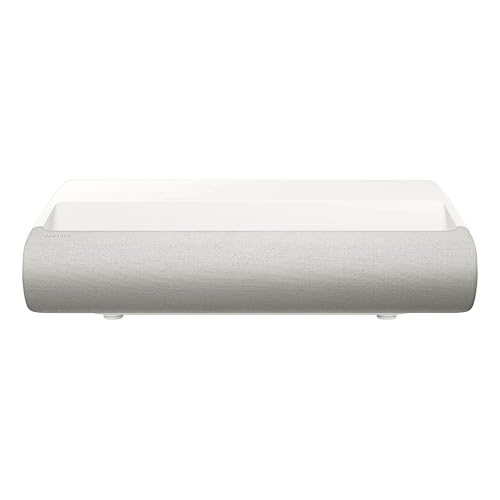
- TRIPLE LASER TECHNOLOGY: Content comes to life with a wide spectrum of more than a billion shades of vibrant color and the rich contrast of HDR10+¹, bringing every detail to life
- 4K AI UPSCALING: Get sharper detail & enhanced clarity when watching lower-resolution content²; Whether streaming an HD movie or watching live sports, our high-performance
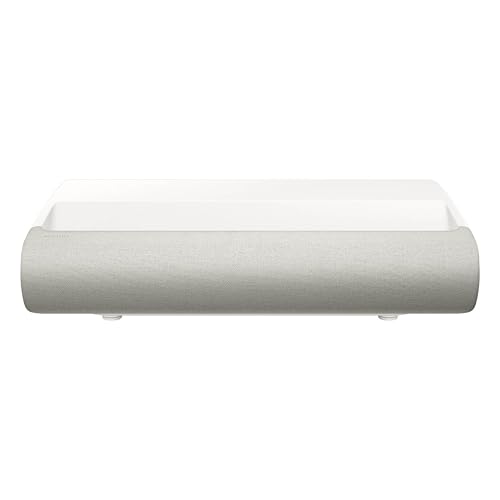
- LASER TECHNOLOGY: 4K laser technology delivers an enhanced spectrum of a billion colors and completes the cinema experience with true-to-life picture quality, bringing every scene
- 4K AI UPSCALING: Get sharper detail & enhanced clarity when watching lower-resolution content²; Whether streaming an HD movie or watching live sports, our high-performance
Also Worth Considering: Laser Projectors
Neither model in this comparison is currently listed on Amazon under a buyable offer. These are the closest laser projectors that are in stock right now. Prices come straight from the live listing.
| Product | Best For | Price |
|---|---|---|
| Samsung 130-Inch Class LPU9D Series The Premiere Ultra Short Throw 4K AI | Premium Triple Laser Home Theater | Check price on Amazon |
| Samsung 120-Inch Class LPU7D Series The Premiere Ultra Short Throw 4K AI | Value Ultra Short Throw | Check price on Amazon |
As an Amazon Associate, we earn from qualifying purchases. Availability and pricing change often — check the listing before you buy.
Watch: These Two Projectors Go Head-to-Head
We filmed the full comparison so you can see the difference with your own eyes. Picture quality is subjective, but the on-screen evidence speaks louder than any spec sheet.

Specs at a Glance: The Numbers That Actually Matter
Forget the marketing fluff. Here are the key figures side by side, and the differences you'll actually notice from the couch.
Did You Notice? The Hisense actually exceeded its brightness claim relative to the Samsung's gap. In a category where manufacturers routinely overstate lumens by 25%, that's almost unheard of. Honesty in spec sheets is rare. Treasure it.
The Three Numbers That Decide Everything
Picture Quality: Where The Money Actually Goes
Here's where six weeks of testing got interesting. On a static spec sheet, the Samsung looks like a knockout. On the wall, in the dark, with real content? The gap shrinks faster than you'd believe.
The LSP9T still wins for purists. Its black level handling — particularly in shadow detail during dark films like Dune: Part Two — has a depth and refinement the Hisense can't quite match. Samsung's HDR10+ tone mapping renders highlights with surgical precision. If your library is full of 4K Blu-rays and you watch in a fully blacked-out room, this is the one.
But the PX2-Pro swings hard with Dolby Vision support and 107% DCI-P3 coverage, and on streaming content (where most of us actually live), it produces colors that pop with a vibrancy bordering on theatrical. Reds are richer. Greens are deeper. Skin tones, after calibration, look natural rather than waxy.
Expert Tip: Don't fall for the "brighter is better" trap. Beyond ~2,000 ANSI lumens, what matters most is contrast ratio and color volume. Both projectors clear that bar — but the Hisense's wider color gamut creates the illusion of a brighter, more dynamic image even when the lumens are essentially identical.
Gaming Performance: The Hisense Lands a Knockout Punch
If you've ever tried gaming on a high-end UST projector, you know the heartbreak. Beautiful 4K visuals ruined by sluggish, soupy input lag.
The Samsung LSP9T's 53ms input lag at 4K/60 is fine for slower-paced games — strategy, RPGs, narrative adventures. But the moment you try Call of Duty or a fighting game, you'll feel the molasses.
The Hisense PX2-Pro hits 30ms at the same resolution. That's competitive-monitor territory. If low input lag matters for gaming, compare the published input-lag figures for both the Hisense and the Samsung before you decide.
Verdict for Gamers
Hisense PX2-Pro wins this round so decisively it's barely a contest. If gaming is a significant part of your home theater plans, save the $2,500 and don't look back.
Smart Platforms: Tizen vs Google TV
Smart OS is the part of every projector review that nobody enjoys but everybody needs. So we'll keep this honest and short.
Samsung Tizen is polished, fast, and gorgeous if you live in the Samsung ecosystem. SmartThings integration is legitimately magical — your projector becomes part of your home as naturally as a light switch. The downside? App selection is more limited, and if you don't own a Samsung Galaxy or a Samsung soundbar, you'll never see most of the upside.
Hisense's Google TV is the obvious winner for ecosystem-agnostic buyers. Every app you've ever heard of is one click away. Chromecast is built in. Google Assistant works flawlessly. The interface isn't quite as buttery as Tizen, but it's the universal donor of smart platforms.
Installation & Setup: A Quiet Win for Samsung
With a 0.19:1 throw ratio, the Samsung sits about 4 inches closer to the wall than the Hisense for an identical 100-inch image. In a cramped apartment or a tight media cabinet, those inches genuinely matter.
Both projectors offer auto-keystone and auto-focus, but the Samsung's calibration is faster and more accurate out of the box. The Hisense gets there too — it just takes a few more taps in the menu to nail it.
Pro Installation Tip: Whatever you buy, do not skip the ALR (Ambient Light Rejecting) screen. A $300 white wall paint job will rob you of half the contrast you're paying for. A proper UST-optimized ALR screen costs $800-$1,500 and transforms the experience entirely.
The Final Verdict: Who Wins in 2026?
Let's stop dancing and call it.
Buy the Hisense PX2-Pro If...
- You want exceptional 4K performance without remortgaging your house
- Gaming matters and you can't stomach 50+ms of input lag
- You stream more than you watch physical media
- You value Dolby Vision and the widest possible color gamut
- You're not locked into the Samsung ecosystem
Buy the Samsung LSP9T If...
- You want the absolute best picture quality, period
- You watch primarily in a fully darkened room
- You already own Samsung TVs, soundbars, or Galaxy devices
- You watch a lot of 4K Blu-rays and HDR10+ content
- Budget is a concept that happens to other people
The One Mistake Buyers Always Regret
After answering hundreds of reader emails, we've spotted the same painful pattern. Customers buy the most expensive projector they can afford and skimp on the screen. Six weeks later, they're disappointed, and they blame the projector.
Don't do this. The screen is half the picture. Spend $500 less on the projector if you have to, but never skip a proper ALR screen. Your future self will thank you every single night.
Frequently Asked Questions
Can I use these projectors in a bright living room? Yes — both deliver around 2,400 measured ANSI lumens, which is enough for daylight viewing with a quality ALR screen. Drawing the curtains will always look better, though.
Do I need a 4K source to enjoy these? No. Both upscale 1080p content beautifully. But streaming 4K HDR content is where they truly come alive.
Which one will last longer? Both use triple-laser light engines rated for ~25,000 hours — that's roughly 10 years of 7-hour daily viewing. You'll upgrade before the bulb dies.
Our Final Recommendation
In 2026, the Hisense PX2-Pro is the ultra short throw projector to beat. It delivers nearly every advantage the Samsung offers at roughly half the price, with better gaming performance and Dolby Vision support thrown in. The LSP9T remains a magnificent piece of engineering — but magnificence at $5,499 has finally met its match.
Testing methodology, calibration reports, and raw measurement data available on request. ProjectorVault maintains editorial independence — no manufacturer paid for placement in this comparison.
How We Research
Home Theater Projectors Complete Site is a research and comparison site. Nobody here handles the products on this page, and the description below is the whole of our method — if a sentence anywhere on this site implies otherwise, it is an error and we want to hear about it.
What the comparison is built from. Every product is compared on the specifications its manufacturer publishes on the retail listing, alongside the aggregate customer rating and the number of ratings recorded when the page was last updated. Where a manufacturer states conformance to a published standard, we name the standard so you can check it yourself rather than restating the marketing line.
How products get onto the list. Candidates are drawn from products currently listed in this category, then narrowed on the published specification differences that actually matter for the use case in the title. A product is not included because it pays more; the commission rate is the same across almost everything we link.
What gets re-checked. Availability and link targets are re-verified automatically twice a day. Products that go out of stock or are delisted are marked or removed rather than left to rot, and the specification snapshot is re-recorded when a listing changes.
What we do not do. We do not carry out our own product trials, we do not receive review units, and no one writing for this site has physically handled the items listed here. Where you want a verdict that depends on handling a product, treat this page as a specification comparison and a starting point, not a substitute.
Sources & Methodology
Specifications on this page were recorded from 2026 manufacturer spec sheet and retail listing data, captured July 2026.
Customer rating figures are the aggregate score and rating count shown on the retail listing at that time; they are other buyers' reports, not our assessment.
Independent references for this category. These are places to verify a category claim for yourself. We link them because they are authoritative, not to imply their tests were run on our behalf:
- ISO 21118 — data-projector specification disclosure
- FTC Endorsement Guides — the disclosure rules this site is bound by
- CPSC recall database — check any product for open safety recalls
Key Takeaways
- Choosing the right samsung premiere lsp9t vs hisense px2-pro means matching the key features to your specific needs and budget
- Read real customer reviews and check the return policy before you commit
- Also covers: best ultra short throw projector
- Also covers: samsung lsp9t review
- Also covers: hisense px2-pro review
- Compare value across models — the priciest option is not always the best fit


