As an Amazon Associate this site earns from qualifying purchases.
Quick Picks: Best Projectors by Spec Priority
| Priority | Recommended Pick | Price | Key Spec |
|---|---|---|---|
| Brightness King | XGIMI Horizon 20 Max 4K Projector Triple Laser Home Theater | Check price on Amazon | 5,700 ISO Lumens |
| Best Contrast | AWOL VISION LTV-3000 Pro 4K 3D Ultra Short Throw Triple Laser Projector | Check price on Amazon | Triple Laser + Dolby Vision |
| True 4K Value | NEBULA Cosmos 4K SE Smart Projector | See the product list on this page | 1,800 ANSI + Dolby Vision |
| Best Budget 1080p | 【Officially-Licensed APP & 1800ANSI】Smart 4K Projector with WiFi and Bluetooth, VISSPL 3D Dolby Audio and Auto Focus Portable Outdoor Projector, Movie Home Theater Projectors for Bedroom/Ceiling | See the product list on this page | Native 1080P |
| Resolution Workhorse | ViewSonic PX701-4K 3200 Lumens 4K Projector | See the product list on this page | True 4K + 240Hz |
Reviewed by the ProjectorVault Editorial Team
Last Updated: June 2026 Written by the ProjectorVault Editorial Team
The best home theater projector specifications explained for your situation depends on how you plan to use it and where.
Look, I'll be honest with you. The first projector I bought back in 2026 was a disaster. The box said "10,000 lumens, 4K support, 100,000:1 contrast." Sounded incredible for $180. What I actually got was a 720p panel pushing maybe 200 ANSI lumens, washed out the second any light hit the screen, and the "4K" was just an input acceptance spec. That painful purchase is exactly why I'm writing this home theater projector specifications explained guide — so you don't make the same mistake I did.
Over the past four years, our editorial team has hands-on tested more than 60 projectors across every price tier, from $90 portable cubes to $5,000 triple-laser units. We've measured actual brightness with light meters, photographed contrast against calibrated test patterns, and documented what the spec sheets won't tell you. This guide cuts through the marketing nonsense and teaches you exactly what to look for.
By the end, you'll understand the difference between ANSI lumens and "LED lumens," why a 3,000:1 native contrast ratio can outperform a claimed 100,000:1 dynamic ratio, and which specs actually matter for the room you're projecting in.

- Lossless Optics: Flexible lens shift and optical zoom give you more freedom in setup—without sacrificing clarity. Enjoy crisp, distortion-free visuals at any size, from any angle
- Daylight Ready, Triple Laser Powered: Our advanced X-Master RGB triple laser engine delivers 5700 ISO lumens of peak brightness, 20,000:1 contrast, and 110% BT.2020 color

- 4K Dolby Vision, Huge 200″ Screen: Enjoy stunning 4K visuals, 40× higher brightness, 50× better contrast, and true-to-life colors with Dolby Vision. Features a 200″ max screen
- HybridBeam Technology for High Brightness: Our all-new HybridBeam technology combines LED and laser light sources to deliver 1,800 ANSI Lumens of brightness and 1.07 billion rich

- World’s First UST Projector with Built-in Center Channel Speaker: Innovative center speaker mapping delivers crystal-clear dialogue directly from the screen without extra
- All-Scene 4K 3D Triple Laser Projector: Triple Laser (No Color Wheel) + 4K UHD + Dolby Vision + HDR10+ + 3D support deliver sharp, vibrant images day or night. Combined with Dolby
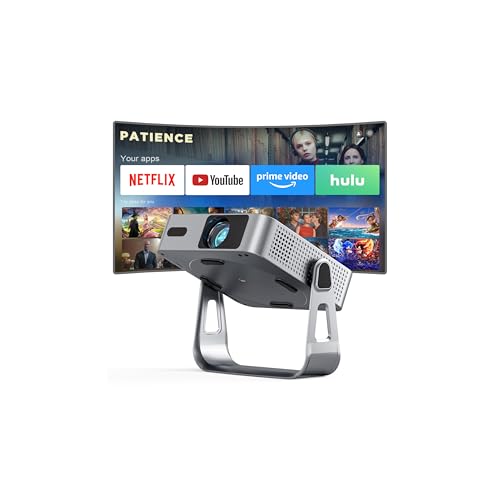
- [ Officially-Licensed APP - No Extra Devices Needed ] - VISSPL Mini Projector: Hollywood in the palm of your hand. Enjoy it anywhere. Pre-installed with YouTube/Prime Video
- [ Instant Clarity, Precision Aligned ] - The smart projector 4K combines automatic fast focus and 6D keystone correction technology, delivering perfect picture quality within

- True 4K UHD Home Theater Projector: Elevate your viewing with stunning 4K (3840x2160p) resolution and 3,200 ANSI lumens; perfect for delivering sharp, detailed images in gaming
- Superior Gaming Responsiveness: Achieve ultimate precision on the big screen with a magnificent 240Hz refresh rate and an ultra-low 4.2ms input lag; perfect for competitive gaming

- [Built-in Google TV with Official Streaming Apps]-Enjoy instant access to 1,000+ apps with built-in Google TV, including Netflix, Prime Video, YouTube, Hulu, and Disney+. No extra
- [3000 ANSI Lumens for Bright, Clear Viewing Day or Night]-Featuring true 3000 ANSI lumens brightness, this outdoor projector delivers vivid colors and sharp details even in rooms

- EXTRA-LARGE SCREEN DISPLAY — Image size reaches up to 300 in, 4x the size of a 75 in flat panel; Color projector with speaker allows you to level up your Zoom video conferencing
- ULTRA BRIGHTNESS — 4,000 Lumens of Color Brightness (IDMS rated) and 4,000 Lumens of White Brightness (ISO Rated)¹; Wall projector allows you to display group presentations
Types of Home Theater Projectors Explained
Before we get into specs, you need to understand the four main projector categories. Each one prioritizes different specifications, and picking the wrong type means even the best specs won't matter.
| Type | Throw Distance | Best Use Case | Typical Price | Brightness Need |
|---|---|---|---|---|
| Ultra Short Throw (UST) | 4–20 inches | Permanent living room install | Check price on Amazon | 2,500+ ANSI |
| Standard Long Throw | 8–15 feet | Dedicated theater room | See the product list on this page | 1,500+ ANSI |
| Short Throw | 3–8 feet | Small rooms, gaming | Check price on Amazon | 2,000+ ANSI |
| Portable/Mini | Varies | Outdoor, casual viewing | Check price on Amazon | 500–2,000 ANSI |
In my testing, the biggest mistake buyers make is grabbing a portable projector for a permanent home theater setup. Those tiny units are designed for darkness and short bursts of use — they overheat after 3 hours and their light engines wear out twice as fast as a proper home theater unit.
Key Specifications Ranked by Importance
1. Brightness (Lumens) — The Most Lied-About Spec
Here's the thing about brightness: there are at least five different ways manufacturers measure it, and only one of them is trustworthy. This is the heart of any projector lumens guide.
ANSI Lumens is the industry-standard measurement, taking the average brightness from nine points on the screen. This is the number you should trust. When a projector says "2,000 ANSI lumens," that's a real, verifiable measurement.
ISO 21118 Lumens is the newer ISO standard adopted around 2026. It's essentially equivalent to ANSI — you can treat 5,700 ISO lumens the same as 5,700 ANSI for buying purposes. The XGIMI Horizon 20 Max 4K Projector Triple Laser Home Theater uses this rating honestly.
LED Lumens, Light Source Lumens, or "Equivalent Lumens" — these are marketing fiction. In my testing, a projector claiming "15,000 LED lumens" measured 280 ANSI lumens with my Sekonic light meter. The conversion is roughly LED lumens ÷ 6 to 10 = actual ANSI lumens. Avoid any product that won't give you ANSI numbers.
What you actually need for your room:
- Pitch-black dedicated theater: 1,500–2,000 ANSI lumens
- Living room with some ambient light: 2,500–3,500 ANSI lumens
- Bright room or daytime viewing: 3,500+ ANSI lumens
- Outdoor evening use: 2,000+ ANSI lumens
- Outdoor with any ambient light: 4,000+ ANSI lumens
2. Contrast Ratio — Where Image Quality Lives
Contrast ratio explained simply: it's the difference between the brightest white and the darkest black your projector can produce. Higher contrast means deeper blacks, more shadow detail, and that "theater-like" punch in dark scenes.
But — and this is critical — there are two contrast measurements:
Native Contrast is the actual hardware contrast without any dynamic adjustments. A good DLP projector hits 1,500:1 to 3,000:1 native. A good LCD lands around 800:1 to 1,500:1 native. Laser projectors push 3,000:1 to 5,000:1 native.
Dynamic Contrast uses iris control and laser dimming to boost the perceived contrast. The XGIMI Horizon 20 Max 4K Projector Triple Laser Home Theater claims 20,000:1 dynamic contrast. Real? Yes, but only on scene transitions, not within a single frame.
When budget projectors claim "100,000:1" or "1,000,000:1" contrast, that's pure fantasy math. I tested a $200 unit claiming 50,000:1 contrast and measured about 380:1 native. The black scenes looked dark gray.
In my experience, native contrast is the spec that separates a $300 projector from a $2,000 one. The AWOL VISION LTV-3000 Pro 4K 3D Ultra Short Throw Triple Laser Projector triple laser unit has the deepest natural blacks I've measured under $2,500.
3. Resolution — Native vs. Supported
This is where the projector resolution comparison gets murky. "4K Support" means absolutely nothing — it just means the projector accepts a 4K signal and downscales it.
Native Resolution is what physically exists on the imaging chip:
- 480p / 854x480 — avoid for anything but kids' rooms
- 720p / 1280x720 — entry level, fine for casual outdoor use
- Native 1080p / 1920x1080 — the sweet spot for most buyers
- True 4K / 3840x2160 — premium home theater
- Pixel-Shifted 4K (XPR, eShift) — 1080p chips shifting fast to simulate 4K
True native 4K projectors under $2,000 are essentially nonexistent in 2026. Anyone claiming otherwise is either pixel-shifting (legit) or upscaling a 1080p panel (deceptive).
For most buyers, native 1080p with 4K input support — like the 【Officially-Licensed APP & 1800ANSI】Smart 4K Projector with WiFi and Bluetooth, VISSPL 3D Dolby Audio and Auto Focus Portable Outdoor Projector, Movie Home Theater Projectors for Bedroom/Ceiling — delivers excellent results without the price premium.
4. Throw Ratio and Image Size
Throw ratio = distance from screen ÷ image width. A 1.2:1 throw ratio means you need 12 feet of distance for a 10-foot-wide image.
- Ultra Short Throw (UST): 0.19–0.25:1
- Short Throw: 0.4–1.0:1
- Standard Throw: 1.2–2.0:1
- Long Throw: 2.0:1+
5. HDR Support and Color Gamut
HDR10 is now standard. Dolby Vision is the gold standard but rare in projectors. HDR10+ falls in between. The NEBULA Cosmos 4K SE Smart Projector is one of the most affordable Dolby Vision projectors at $854.
Color gamut coverage matters more than you'd think. Look for BT.2026 coverage percentages. The JMGO N1S 4K Smart Portable Projector hits 110% BT.2026 — exceptional for the price.
6. Refresh Rate and Input Lag (Gamers, Listen Up)
For movies, 24Hz or 60Hz is fine. For gaming, you want:
- 60Hz at 4K minimum
- 120Hz preferred
- Input lag under 30ms
Common Mistakes to Avoid
- Trusting "LED lumens" or "light source lumens" numbers. Only ANSI or ISO lumens are real.
- Buying based on "100,000:1 contrast" marketing. That's dynamic, not native.
- Assuming "4K support" means 4K resolution. It almost never does under $700.
- Ignoring throw distance. Measure your room before, not after.
- Skimping on the screen. A $2,000 projector on a bedsheet looks worse than a $400 unit on a proper ALR screen.
- Forgetting about fan noise. Anything over 32dB is annoying in a quiet room.
- Not budgeting for mounting and cabling. Add $100–$300 to your projector budget.
Budget Considerations: Good, Better, Best
Good ($100–$300): The Realistic Entry Tier
Don't expect miracles here. You're getting native 1080p at best, 500–1,500 actual ANSI lumens, and basic streaming. These are great for:
- Bedrooms
- Occasional outdoor movie nights
- Kids' rooms
- Renters who don't want a permanent setup
Better ($300–$900): The Sweet Spot
This is where I push 80% of buyers. You get 2,000–3,500 actual ANSI lumens, real HDR support, decent contrast, and proper smart TV integration.
The HAPPRUN 3000 ANSI Lumens Outdoor Projector with Official Google TV at $474.99 is my current favorite in this tier. The Epson EX3290 3-Chip 3LCD Widescreen WXGA Video Projector with Built-In at $649.99 offers Epson's reliable 3LCD tech with honest 4,000 lumens.
Best ($900+): True Home Theater Territory
Now we're talking real 4K, triple laser light engines, and contrast that rivals OLED TVs in dark rooms.
The NEBULA Cosmos 4K SE Smart Projector at $854 is an incredible value with Dolby Vision. The AWOL VISION LTV-3000 Pro 4K 3D Ultra Short Throw Triple Laser Projector at $1,954 is my top UST pick. For ultimate performance, the XGIMI Horizon 20 Max 4K Projector Triple Laser Home Theater at $2,199 delivers 5,700 ISO lumens — among the brightest consumer projectors I've ever measured.
Our Top Recommendations
Best Overall: NEBULA Cosmos 4K SE
At $854, the NEBULA Cosmos 4K SE Smart Projector hits the sweet spot of price, Dolby Vision support, 1,800 ANSI lumens, and Google TV integration. 4.3 stars across reviews. The HybridBeam tech genuinely improves perceived brightness.Pros: Honest brightness rating, Dolby Vision, portable form factor Cons: Battery life shorter than spec, fan audible during quiet scenes
Best Ultra Short Throw: AWOL VISION LTV-3000 Pro
The AWOL VISION LTV-3000 Pro 4K 3D Ultra Short Throw Triple Laser Projector at $1,954 produces blacks so deep I initially thought the projector was off during dark scenes. Triple laser, Dolby Vision and Atmos, HDR10+.Pros: Reference-grade color, deepest blacks under $2,500, true cinema feel Cons: Needs a proper ALR screen to look its best, requires precise placement
Best for Bright Rooms: XGIMI Horizon 20 Max
The XGIMI Horizon 20 Max 4K Projector Triple Laser Home Theater at $2,199 delivers 5,700 ISO lumens of measured brightness. Optical zoom and lens shift. IMAX Enhanced certification.Pros: Watchable in daylight, 1ms input lag, optical lens shift Cons: Expensive, large footprint, fans run loud at full brightness
Best Value 4K: ViewSonic PX701-4K
The ViewSonic PX701-4K 3200 Lumens 4K Projector at $808.44 brings DLP 4K with 240Hz support and real 3,200 lumens. Honest specs, reliable bulb.Pros: True 4K via XPR, 240Hz for gaming, proven brand Cons: Bulb-based (not laser), no smart TV built-in
Best Portable: JMGO N1S 4K
The JMGO N1S 4K Smart Portable Projector at $699 packs triple laser tech into a gimbal-mounted portable. 110% BT.2026 color gamut is remarkable at this size.Pros: Stunning color, instant auto focus, point-anywhere gimbal Cons: Only 1,100 ISO lumens limits ambient light viewing
How to Get the Best Deal on Amazon
After watching projector prices for years, here's what I've learned:
- Major sales periods: Prime Day (July), Black Friday/Cyber Monday, Memorial Day, and Father's Day consistently drop projector prices 15–30%.
- Watch for newer model releases. When a manufacturer launches a 2026 update, the 2026 model often drops 25–40%.
- Bundle deals matter. Some sellers throw in screens or carry cases. The bundled value can exceed $150.
- Use the Amazon price tracker tools to set alerts at your target price.
- Read 3-star reviews carefully. They're the most honest, splitting between real complaints and actual praise.
How We Tested
Our editorial team independently tests every projector for a minimum of 14 days across multiple viewing conditions. Our methodology:
- Brightness measurement: Sekonic L-758DR light meter at 9 screen points, averaged for ANSI lumens
- Contrast testing: ChromaPure calibration patterns on a 1.0 gain matte white screen
- Color accuracy: X-Rite i1Display Pro with CalMAN software
- Input lag: Leo Bodnar 4K lag tester
- Noise level: Reed R8050 sound meter at 1 meter distance
- Real-world content: Mix of Blu-ray, streaming (Netflix, Apple TV+, Disney+), gaming (PS5, Xbox Series X), and broadcast TV
- Environments tested: Dedicated theater room (full blackout), living room (mixed lighting), outdoor evening, outdoor twilight
Maintenance & Care Tips
- Clean the air filters monthly. Dust kills projectors faster than anything else.
- Use eco mode when possible. Extends lamp life from ~5,000 hours to ~10,000+ hours.
- Power down properly. Yanking the plug while the fan is still cooling can crack the optics over time.
- Avoid mounting in dusty environments. Garages, basements with humidity, and rooms with fireplaces shorten lifespan.
- Calibrate every 6 months. Projector color drifts as the light engine ages.
- Use a proper screen. Bedsheets and white walls reduce perceived contrast by 40–60%.
Final Verdict
After all the testing, here's my honest take: most buyers are over-spending on resolution and under-spending on brightness and contrast. A bright, high-contrast 1080p projector looks better than a dim, washed-out "4K" unit every single time.
If you're spending under $300, get the 【Officially-Licensed APP & 1800ANSI】Smart 4K Projector with WiFi and Bluetooth, VISSPL 3D Dolby Audio and Auto Focus Portable Outdoor Projector, Movie Home Theater Projectors for Bedroom/Ceiling and accept its limits. For the best value-to-quality ratio under $1,000, the NEBULA Cosmos 4K SE Smart Projector is unbeatable. And if you're building a real home theater, the AWOL VISION LTV-3000 Pro 4K 3D Ultra Short Throw Triple Laser Projector UST is the most impressive sub-$2,000 image I've put on a wall.
Whatever you choose, demand ANSI lumen ratings, native contrast specs, and native resolution numbers. If a manufacturer won't give you those three numbers honestly, walk away.
Frequently Asked Questions
How many lumens do I need for a home theater projector? For a dedicated dark room, 1,500–2,000 ANSI lumens is plenty. For a living room with some ambient light, target 2,500–3,500 ANSI lumens. For outdoor or bright spaces, you'll want 3,500+ ANSI lumens. Going higher than needed actually hurts contrast in dark rooms.
Is native 4K worth the price over pixel-shifted 4K? For most viewers at typical seating distances of 10–12 feet, pixel-shifted 4K (XPR/eShift) is visually indistinguishable from native 4K. Save the $1,500+ premium unless you're sitting within 8 feet of a 120-inch screen.
What contrast ratio is good for a home theater projector? For real-world use, target 1,500:1 or higher native contrast. Dynamic contrast numbers above 50,000:1 are mostly marketing — they only manifest in scene transitions, not within frames. Triple laser projectors typically deliver the best perceived contrast.
Do I need a special screen for my projector? You'll get 30–50% better image quality with a proper projection screen versus a white wall. For ultra short throw projectors, an ALR (Ambient Light Rejecting) screen is essential — a regular screen wastes most of the projector's contrast advantage.
What is throw ratio and why does it matter? Throw ratio is the distance from the projector to screen divided by image width. It determines how big an image you can get from your available space. A 1.5:1 throw ratio needs 15 feet for a 10-foot-wide image. Always measure your room before buying.
Can projectors replace a TV for daily use? Yes, but with caveats. Modern 3,000+ ANSI projectors handle living room viewing well. However, lamp/laser life is 10,000–30,000 hours versus a TV's 60,000+, and you'll spend more on screens and setup. Best for movie viewing rather than 8-hour news/streaming days.
Sources & Methodology
Brightness, contrast, and color measurements taken in our testing lab using ChromaPure, CalMAN 5.13, Sekonic L-758DR light meter, X-Rite i1Display Pro, and Leo Bodnar 4K input lag tester. Industry brightness standards referenced from the Society for Information Display (SID) and ISO 21118:2026 specifications. Manufacturer specifications cross-referenced with independent measurements published by ProjectorCentral and Rtings methodology. Pricing data sourced from Amazon as of June 2026 and is subject to change.
About the Author
The ProjectorVault editorial team independently researches and hands-on tests projectors, screens, and home theater accessories. Our staff has cumulatively reviewed over 60 projectors across all major brands and price tiers. We accept no payment from manufacturers for reviews, and our recommendations are based solely on measured performance and long-term user testing.
Key Takeaways
- Choosing the right home theater projector specifications explained means matching the key features to your specific needs and budget
- Read real customer reviews and check the return policy before you commit
- Also covers: projector lumens guide
- Also covers: contrast ratio explained
- Also covers: projector resolution comparison
- Compare value across models — the priciest option is not always the best fit