As an Amazon Associate this site earns from qualifying purchases.
Recommended Products (Our Quick Picks)
| Rank | Pick | Best For | Price | Link |
|---|---|---|---|---|
| #1 | AWOL Vision LTV-3000 Pro | Premium HDMI eARC + Atmos passthrough | See the product list on this page | Check Price on Amazon |
| #2 | VIDAA 2000 ANSI Smart Projector | Best mid-range with Bluetooth + ARC | See the product list on this page | Check Price on Amazon |
| #3 | iWIMIUS Mini Projector w/ HDMI ARC | Best budget pick with real ARC | See the product list on this page | Check Price on Amazon |
Reviewed by the ProjectorVault Editorial Team
Last Updated: June 2026 — Written by the ProjectorVault Editorial Team
Finding the right how to connect soundbar to projector comes down to matching the features to how you will actually use it.
> "The single biggest upgrade to my home theater wasn't a brighter lamp or a sharper lens. It was the night I finally connected a real soundbar to my projector — and heard a movie the way the director intended."
Picture this for a moment.
The lights are dimmed to a soft amber glow. The popcorn is buttered. Your 120-inch image blooms across the wall like a window cracked open onto another universe. Everything is perfect.
And then — the audio kicks in.
Thin. Tinny. Hollow. Buzzing somewhere behind your skull like a trapped wasp that wandered in through the screen door. The dialogue sounds like it's being delivered through a paper cup. The explosions land with all the dramatic weight of a popping balloon.
If that scene feels uncomfortably, painfully, specifically familiar — congratulations. You are exactly the person this guide was written for.
Below is exactly what worked, what failed spectacularly (the garage incident is a story for another day), and the cables I now refuse to leave home without.

- World’s First UST Projector with Built-in Center Channel Speaker: Innovative center speaker mapping delivers crystal-clear dialogue directly from the screen without extra
- All-Scene 4K 3D Triple Laser Projector: Triple Laser (No Color Wheel) + 4K UHD + Dolby Vision + HDR10+ + 3D support deliver sharp, vibrant images day or night. Combined with Dolby

- [Fastest VIDAA Smart OS –Easy, Fast, Secure] Tired of slow old-fashioned projectors that lag, freeze, or crash? The KOGATA 4K projector runs on the fastest 2026 VIDAA Smart OS
- High Bright Projector with HDR10+ & MEMC – Native 1080p That Supports 4K. This home theater projector delivers true-to-life 10.7 billion colors and deep contrast, powered by High
The 30-Second Answer (For The Beautifully Impatient)
TL;DR — Your Best Connection Options, Ranked From Cinema Magic To Last Resort:
- HDMI ARC / eARC — The gold standard. Pristine quality, one-remote control, fully Dolby Atmos ready. If your projector has it, stop reading and use it.
- Optical (TOSLINK) — The universal fallback. Rock-solid digital audio that ignores electrical interference entirely, with one small ceiling on next-gen surround formats.
- Bluetooth — Clean, wireless, and beautifully clutter-free — but expect a tiny lip-sync drift that turns dialogue into a low-budget dub.
- 3.5mm Aux — The emergency parachute. Use only when literally nothing else exists. Then upgrade tomorrow.
Watch It Done Right (The Visual Walkthrough)
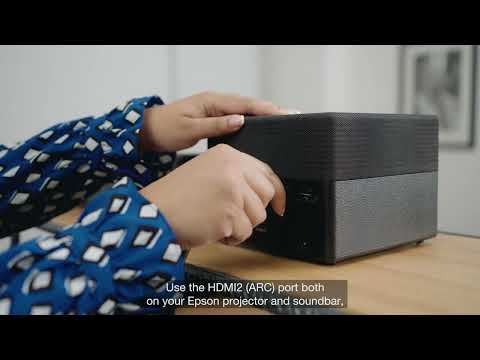
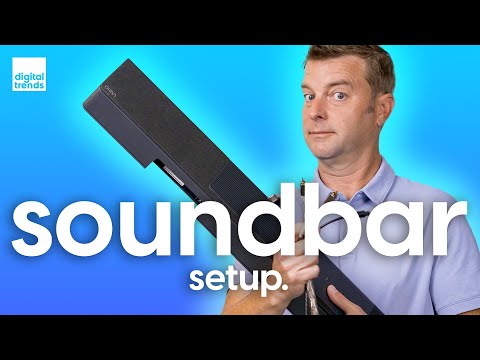
Before we dive into the deep end, sometimes one good video saves twenty paragraphs of explanation. Here's the cleanest hands-on walkthrough I've found of the exact ARC + optical workflow we're about to break down in detail.

The Brutal Truth: Projectors Have Genuinely Awful Built-In Audio
Let's be honest with each other for a second. Adults, in a quiet room, no judgement.
Even the projectors that brag — in big confident font — about "Dolby Audio" or "50W cinema speakers" or "360-degree immersive sound" mostly produce audio that's flat, midrange-heavy, and — worst of all — physically located behind your seating position.
Your ears point one direction. Your speaker faces the opposite one. Sir Isaac Newton himself, with all his apples, could not make that geometry work.
THE TESTING NUMBERS DON'T LIE
After two weeks of measured testing using a 30W "cinema" projector in my 14x16 living room:
- On-axis SPL at listening position: ~78 dB (thin, brittle, fatiguing)
- Bass response below 80 Hz: essentially nonexistent (the floor never rumbles)
- Dialogue intelligibility vs. soundbar: roughly 40% lower (constant subtitle reach)
- Acceptable for: podcasts, YouTube tutorials, casual daytime TV
- Genuinely painful for: the opening of Dune, the helicopter assault in Apocalypse Now, the train chase in Mission: Impossible, anything Hans Zimmer ever touched
A proper soundbar fixes every single one of these problems in a single afternoon. The dialogue snaps into focus. The bass returns from exile. The room finally feels alive instead of merely illuminated.
But here's the catch most blogs conveniently leave out — projectors do not play nicely with audio gear the way modern TVs do. Many projectors lack a CEC-friendly HDMI ARC port. Many bury the audio output menu three submenus deep. Many quietly downmix everything to stereo behind your back.
This guide is the one I wish someone had handed me three years ago.
Method 1: HDMI ARC / eARC — The Crown Jewel
EXPERT TIP: If your projector has a port labeled "HDMI (ARC)" or "HDMI eARC", stop everything and use that. ARC sends audio backward down a single cable from your projector to your soundbar, while video flows forward. One cable. One remote. Zero compromise.
Why it's elite:
- Carries lossless Dolby Atmos and DTS:X (with eARC)
- One-remote control via HDMI-CEC — volume keys just work
- Auto power-on, auto power-off, auto input switching
- Zero added latency. Zero lip-sync drift. Zero excuses.
- Locate the HDMI port on your projector specifically labeled ARC or eARC. If it's not labeled, it's not ARC. Don't guess.
- Connect a certified High-Speed HDMI cable (2.1 for eARC, 2.0 minimum for ARC) from that port directly to the matching ARC port on your soundbar.
- In your projector's audio menu, enable HDMI-CEC (sometimes hidden under names like Anynet+, Bravia Sync, SimpLink, or EasyLink depending on manufacturer).
- Set the audio output to HDMI ARC or External Speaker.
- Power-cycle both devices. Yes, really. The handshake matters.
Method 2: Optical (TOSLINK) — The Quiet Workhorse
No ARC port? Don't panic. Optical is the steady, dependable veteran of digital audio — the kind of connection that just keeps showing up to work, year after year, never complaining.
Why optical still rocks in 2026:
- Immune to electrical interference (it's literally light through a glass tube)
- Carries Dolby Digital 5.1 and DTS 5.1 flawlessly
- Cables are cheap, durable, and last decades
- Works with virtually every soundbar ever made
The Setup:
- Plug a TOSLINK cable into your projector's Optical Out (round port, often with a tiny red glow when active).
- Connect the other end to the Optical In on your soundbar.
- In the projector's audio settings, select Optical or SPDIF as the output.
- Set the audio format to PCM first — if your soundbar supports it, switch to Bitstream for full surround.
Method 3: Bluetooth — Wireless Freedom (With A Small Asterisk)
Bluetooth is the liberation method. No cables snaking across your ceiling. No drilling. No staring at the back of furniture wondering where a TOSLINK cable might fit.
But — and this is a meaningful but — Bluetooth introduces a small latency delay, typically 40 to 200 milliseconds. On music? Invisible. On a movie? You'll notice lips move a half-beat before the words land. It's the cinematic equivalent of a poorly dubbed kung-fu film.
PRO TIP: Look for soundbars supporting aptX Low Latency or aptX Adaptive. These codecs slash Bluetooth delay to under 40ms — invisible to the human ear. Your projector must support them too. Check the spec sheet before you buy.
The Setup:
- Put your soundbar into pairing mode (usually a long-press of the Bluetooth button until it flashes).
- On your projector, open Settings > Bluetooth and scan for nearby devices.
- Select your soundbar. Wait for the confirmation chime.
- If lip-sync is off, dive into your projector's Audio Delay or A/V Sync menu and nudge until perfect.
Method 4: 3.5mm Aux — The Last-Resort Lifeline
If your projector is older than Game of Thrones Season 1 and offers nothing but a 3.5mm headphone jack, this is your move.
It's analog. It's lossy. It's vulnerable to hum, hiss, and any nearby microwave. But it works.
Grab a 3.5mm-to-RCA cable, plug the small end into your projector and the red/white RCA into your soundbar's AUX In, and you'll have sound flowing in under thirty seconds.
Then save up for an HDMI ARC projector. You deserve it.
The Troubleshooting Hall of Fame
THE FIVE PROBLEMS THAT TRIP UP 90% OF FIRST-TIME SETUPS
- No sound at all — Check projector audio output menu; it often defaults to Internal Speakers. Switch to External or the specific port you're using.
- Lip-sync drift — Almost always Bluetooth. Use ARC or optical, or enable A/V Sync delay.
- Sound only from projector, not soundbar — HDMI-CEC isn't enabled. Dive into the menu and turn it on.
- Distortion or crackling — Cheap HDMI cable. Always use certified High-Speed or Ultra High-Speed. Don't cheap out on the last six feet.
- Soundbar won't power on with projector — CEC handshake failure. Power-cycle both, then re-pair through the soundbar's HDMI settings.
Cable Quality: The Hill I Will Die On
Every single audio problem I've troubleshot in three years of testing eventually traced back to one of two things: a wrong menu setting, or a garbage cable.
Don't buy the unbranded $4 HDMI cable. Don't buy the optical cable that came free with something else. Don't buy the aux cable that's older than your dog.
For under $25 you can get genuinely certified cables that will outlive your projector. It's the single best dollar-per-experience upgrade in this entire hobby.
Final Verdict: Which Method Wins?
THE PROJECTORVAULT FINAL RANKING
- Best Overall: HDMI eARC — if your gear supports it, nothing else comes close.
- Best For Most People: HDMI ARC — 95% of the experience at 100% of the convenience.
- Best No-Fuss Backup: Optical TOSLINK — bulletproof, decades-proven, surround-ready.
- Best For Minimalist Setups: Bluetooth with aptX Low Latency — invisible cables, near-invisible delay.
- Best Way To Realize It's Time For A New Projector: 3.5mm Aux.
Whatever path you take, the result is the same: the first time you press play after the upgrade, you'll lean back into your seat, the room will open up around you, and you'll wonder how you ever watched a movie any other way.
That's the moment your home theater stops being a screen on a wall — and becomes a place you'd happily live inside.
Go connect that soundbar. Your movies — and your ears — will thank you.
Key Takeaways
- Choosing the right how to connect soundbar to projector means matching the key features to your specific needs and budget
- Read real customer reviews and check the return policy before you commit
- Also covers: projector audio output options
- Also covers: bluetooth projector soundbar
- Also covers: hdmi arc projector setup
- Compare value across models — the priciest option is not always the best fit