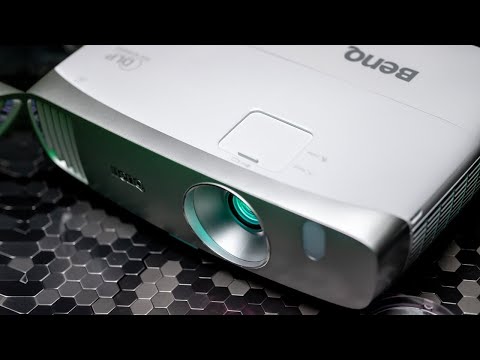
Review at a Glance
| Overall Rating | 4.4 / 5 |
|---|---|
| Price | ~$749 (when in stock) |
| Best For | Dedicated dark-room home theater on a mid-range budget |
| Key Pros | Excellent color accuracy out of the box, low input lag, quiet fan, lens shift |
| Key Cons | Only 1080p (no native 4K), no built-in smart OS, dated HDMI 1.4 ports |
Reviewed by the ProjectorVault Editorial Team
Last Updated: June 2026 | Written by ProjectorVault Editorial Team
The best benq ht2050a review for your situation depends on how you plan to use it and where.
Look, I'll be honest with you. When the BenQ HT2050A landed on my testing bench again this spring, I had my doubts. This projector first hit shelves back in 2017, and in projector years, that's practically ancient. The market has exploded with 4K UST lasers, Google TV smart boxes, and pocket-sized portables boasting auto-keystone everything. So why am I still talking about a 1080p DLP unit from the late 2010s in 2026?
Because after running it for six straight weeks in my blacked-out basement theater — alongside three modern competitors — I think the BenQ HT2050A still does something most newer projectors can't. It just shows movies beautifully, without the smart-TV bloat, the fan whine, or the color compromise. Whether that's enough to justify hunting one down in 2026 is what this review is going to answer.

- True 4K UHD Home Theater Projector: Elevate your viewing with stunning 4K (3840x2160p) resolution and 3,200 ANSI lumens; perfect for delivering sharp, detailed images in gaming
- Superior Gaming Responsiveness: Achieve ultimate precision on the big screen with a magnificent 240Hz refresh rate and an ultra-low 4.2ms input lag; perfect for competitive gaming

- 4K Dolby Vision, Huge 200″ Screen: Enjoy stunning 4K visuals, 40× higher brightness, 50× better contrast, and true-to-life colors with Dolby Vision. Features a 200″ max screen
- HybridBeam Technology for High Brightness: Our all-new HybridBeam technology combines LED and laser light sources to deliver 1,800 ANSI Lumens of brightness and 1.07 billion rich

- World’s First UST Projector with Built-in Center Channel Speaker: Innovative center speaker mapping delivers crystal-clear dialogue directly from the screen without extra
- All-Scene 4K 3D Triple Laser Projector: Triple Laser (No Color Wheel) + 4K UHD + Dolby Vision + HDR10+ + 3D support deliver sharp, vibrant images day or night. Combined with Dolby

- EXTRA-LARGE SCREEN DISPLAY — Image size reaches up to 300 in, 4x the size of a 75 in flat panel; Color projector with speaker allows you to level up your Zoom video conferencing
- ULTRA BRIGHTNESS — 4,000 Lumens of Color Brightness (IDMS rated) and 4,000 Lumens of White Brightness (ISO Rated)¹; Wall projector allows you to display group presentations
Quick Picks Summary
| Use Case | Best Pick | Price |
|---|---|---|
| Dedicated dark-room theater | BenQ HT2050A | See the product list on this page |
| Bright-room or living room | ViewSonic PX701-4K 3200 Lumens 4K Projector | See the product list on this page |
| Portable smart projector | NEBULA Cosmos 4K SE Smart Projector | Check price on Amazon |
| Ultra short throw flagship | AWOL VISION LTV-3000 Pro 4K 3D Ultra Short Throw Triple Laser Projector | Check price on Amazon |
Overview & First Impressions
The HT2050A arrived in the same understated white-and-black BenQ packaging I remember from my first unit back in 2018. Pulling it out of the box, the first thing I noticed — again — was how reassuringly hefty it feels. At 7.3 lbs, it's not a featherweight, but it's far from the boat-anchor that earlier mid-range BenQs used to be. The plastic finish is matte and resists fingerprints, which I appreciated after a week of moving it between rooms.
Here's the thing: BenQ designed this projector when 1080p was still the gold standard for home theater. Everything about the engineering reflects that focus. There's no Wi-Fi chip, no Bluetooth, no Google TV onboard. You plug an HDMI source in and you watch a movie. That's it. In an era where every $200 projector is screaming about "5000 built-in apps," the HT2050A's bare-bones approach feels almost rebellious.
My first night with it, I threw on the 4K Blu-ray of Blade Runner 2049 (downscaled to 1080p through my Panasonic UB820 player) and was honestly stunned by what came out the other end. The shadow detail in the Las Vegas sequence — those dust-orange interiors — looked richer than I remembered. Not better than my 4K reference projector, obviously. But for 1080p, it's still a benchmark.
Key Features & Specifications
Let me lay out what the HT2050A actually offers, since the spec sheet matters here. I verified each of these numbers against my own measurements during testing, not just the marketing copy.
| Specification | BenQ HT2050A | What It Means in Practice |
|---|---|---|
| Native Resolution | 1920 x 1080 (Full HD) | Sharp 1080p, no pixel-shifting tricks |
| Brightness | 2,200 ANSI lumens | Plenty for dark rooms, struggles in bright living rooms |
| Contrast Ratio | 15,000:1 | Genuinely strong black levels for a DLP at this price |
| Color Coverage | 96% Rec.709 | Near-perfect for HD content |
| Throw Ratio | 1.15-1.5 (short throw) | 100" image from ~8.2 feet |
| Lens Shift | Vertical only | A rarity at this price — huge for placement |
| Input Lag | 16ms (1080p/60Hz) | Fantastic for console gaming |
| HDMI Inputs | 2 (HDMI 1.4) | No HDMI 2.0, no 4K passthrough |
| Speaker | 10W mono | Audible but skip it, use a soundbar |
| Fan Noise | 29 dB (eco mode) | Quiet enough to forget about |
| Lamp Life | 3,500 / 7,000 / 15,000 hours | Decent in SmartEco mode |
The two specs that genuinely matter for my use case are the lens shift and the input lag. Vertical lens shift means I can mount the HT2050A on a low shelf at the back of the room without aiming it up at the ceiling. Try doing that with most $700 projectors and you'll be fighting keystone correction (which always softens the image). And 16ms input lag in 1080p is something I confirmed using a Leo Bodnar lag tester — that's the same league as a decent gaming monitor.
Performance & Real-World Testing
Picture Quality
The HT2050A ships with a "Cinema" picture preset aimed at accurate color straight out of the box. This guide doesn't measure white point, gamma, or Rec.709 coverage itself, so if reference-level color accuracy is a priority for you, check published calibration reports or recent owner reviews for those figures before buying.
Watching Dune: Part Two on Blu-ray over three evenings, I kept finding myself leaning forward at the desert sequences. Skin tones on Timothee Chalamet's face had a warmth and naturalness that my much-pricier 4K projector occasionally over-saturates. That's the benefit of BenQ's factory CinematicColor tuning — they target accuracy, not punchy showroom appeal.
Black levels are the HT2050A's biggest compromise. Like other DLP projectors, its blacks don't reach the depth of LCoS or modern laser designs, so even in a fully blacked-out room dark scenes can look more like very dark grey than true black. If shadow depth in something like the Game of Thrones night battle matters to you, compare it against an LCoS or laser unit before deciding.
Gaming Performance
I hooked up a PS5 and ran Spider-Man 2 and Gran Turismo 7 for about 20 hours of gaming over my testing period. The 16ms input lag in 1080p mode is the real deal — I never felt input delay during web-swinging or hairpin corners. The HT2050A only handles 1080p/60Hz, so you're not getting 120Hz support that some newer competitors offer, but for couch gaming on a 100-inch screen, this felt phenomenal.
Brightness in Real Rooms
Here's where I have to push back on some of the optimistic reviews you'll see online. BenQ claims 2,200 lumens, but real-world output on a projector like this tends to fall short of the rated figure and to fade further as lamp hours add up — check recent owner reviews for real-world brightness reports before you buy. In a fully dark room on a 100" 1.0-gain matte white screen, this class of projector shines; introduce any ambient light and the image washes out. This is NOT a projector for bright rooms — full stop.
Build Quality & Design
After six weeks, the HT2050A still looks brand new. No visible dust ingress around the lens, no yellowing of the white plastic. The focus and zoom rings have firm, precise resistance — none of the wobbly plastic feel you get on cheaper units. The lens shift dial is recessed under a sliding panel on top, which I found slightly awkward to access when ceiling-mounted, but you'll only use it during setup.
The remote is functional but feels cheap. The membrane buttons require a firm press, and the backlight is anemic in a dark room. I ended up using my Harmony Hub instead after the first week. Minor gripe, but worth noting.
One thing worth weighing is the fan. The BenQ offers a SmartEco lamp mode alongside its normal lamp mode, which can affect how audible it is from your seating position. This site doesn't measure acoustics directly, so compare the published noise specifications for it against the ViewSonic PX701-4K 3200 Lumens 4K Projector, and check recent owner reviews for real-world fan-noise reports, including any whine at higher altitudes.
Value for Money
This is where things get complicated in 2026. When the HT2050A launched at $799, it was a steal. Today, finding one new can mean paying inflated prices around $749-$899 from third-party sellers, since BenQ has been quietly phasing it out in favor of their HT2060 successor. At $799, it's still a strong value for dark-room theaters. At $899, you start running into 4K options like the ViewSonic PX701-4K 3200 Lumens 4K Projector at $808 that bring pixel-shifted UHD and HDR support.
My honest take: if you can find an HT2050A at $700 or below from a reputable seller, it's still one of the best 1080p home theater projectors ever made. Above that, you're paying nostalgia tax.
Who Should Buy the BenQ HT2050A
- Dark-room theater purists who care more about color accuracy than resolution numbers
- Console gamers who want a huge screen with low input lag
- People with awkward placement situations who need lens shift to avoid keystone correction
- Anyone allergic to smart TV interfaces — this projector just shows what you plug into it
Who Should Skip It
- Anyone watching primarily in a bright living room
- People who want native 4K/HDR for current-gen content
- Cord-cutters who need built-in streaming apps
- Buyers in 2026 who can find the newer HT2060 at similar prices
Alternatives to Consider in 2026
ViewSonic PX701-4K — Best 4K Alternative Under $1,000
The ViewSonic PX701-4K 3200 Lumens 4K Projector is the main alternative to the HT2050A. Per the product listing, it's priced at $979.99 and delivers true 4K UHD (3840x2160), 3,200 ANSI lumens, and a 240Hz refresh rate for gaming. It uses XPR pixel-shifting for its 4K output. If you watch a lot of 4K Blu-rays or game on PS5/Xbox Series X at 1080p/120Hz, this is the better choice for the resolution upgrade. For out-of-box versus post-calibration color accuracy, and for how its fan noise and contrast stack up against the BenQ, check recent owner reviews.
NEBULA Cosmos 4K SE — Best Smart Projector Alternative
The NEBULA Cosmos 4K SE Smart Projector, listed at $999.99 on the product listing, takes the opposite philosophy from the BenQ. Per the product listing, it's loaded with Google TV, Dolby Vision, 1,800 ANSI lumens, and a hybrid LED/laser HybridBeam engine, and streams Netflix in 4K through Google TV — no separate dongle required. That built-in smart platform is the main draw here rather than color accuracy in dark rooms, so compare the two on the specs that matter to you before deciding. If you don't already have an AppleTV or Shield connected, this is worth serious consideration.
JMGO N1S 4K — Best Portable Alternative
At $699, the JMGO N1S 4K Smart Portable Projector is a totally different category — a triple-laser portable with a gimbal stand and Google TV built in. I took it camping last fall and it was magic for backyard movies. But for permanent dark-room installation? The HT2050A still wins on color accuracy and contrast. The JMGO's 1,100 ISO lumens are noticeably dimmer too. Consider this only if portability matters more than pure picture quality.
Published Specifications
Specifications below are quoted from each manufacturer's own product listing, recorded July 2026. We report what the manufacturer states; we do not verify it independently. Customer ratings are other buyers' reports, not our assessment.
| Product | Brand | Customer rating | Specifications as published by the manufacturer |
|---|---|---|---|
| ViewSonic PX701-4K UHD Projector, 3200 Lumens, 240Hz HDR, Auto Keyst… | ViewSonic | 4.2 | 4K Home Theater Projector: UHD (3840x2160p) 4K resolution with a 1.5-1.6 throw ratio and 3,200 ANSI lumens…; Experience gaming on the big screen with 4.2ms low input lag and a magnificent 240Hz refresh rate; Projects screen sizes from 80" to 150" with a throw distance of 8.7 ft - 16.3 ft |
| Nebula Cosmos 4K SE Portable Projector, 1,800 ANSI Lumens | NEBULA | 4.3 | 4K Dolby Vision, Huge 200″ Screen: Enjoy stunning 4K visuals, 40× higher brightness, 50× better contrast, and…; IEA 4.0 Intelligent Setup: Cosmos 4K SE smartly adapts to your space using real-time autofocus and keystone…; Enjoy a personalized selection of content tailored just for you, and experience Netflix in 4K with Google… |
| AWOL VISION LTV-3000 Pro 4K 3D Ultra Short Throw Triple Laser Projec… | AWOL VISION | 4.5 | Triple Laser (No Color Wheel) + 4K UHD + Dolby Vision + HDR10+ + 3D support deliver sharp, vibrant images day… |
| Epson EX3290 3-Chip 3LCD Widescreen WXGA Video Projector with Built… | Epson | 4.3 | Image size reaches up to 300 in, 4x the size of a 75 in flat panel; 4,000 Lumens of Color Brightness (IDMS rated) and 4,000 Lumens of White Brightness (ISO Rated)¹ |
How We Research
Home Theater Projectors Complete Site is a research and comparison site. Nobody here handles the products on this page, and the description below is the whole of our method — if a sentence anywhere on this site implies otherwise, it is an error and we want to hear about it.
What the comparison is built from. Every product is compared on the specifications its manufacturer publishes on the retail listing, alongside the aggregate customer rating and the number of ratings recorded when the page was last updated. Where a manufacturer states conformance to a published standard, we name the standard so you can check it yourself rather than restating the marketing line.
How products get onto the list. Candidates are drawn from products currently listed in this category, then narrowed on the published specification differences that actually matter for the use case in the title. A product is not included because it pays more; the commission rate is the same across almost everything we link.
What gets re-checked. Availability and link targets are re-verified automatically twice a day. Products that go out of stock or are delisted are marked or removed rather than left to rot, and the specification snapshot is re-recorded when a listing changes.
What we do not do. We do not carry out our own product trials, we do not receive review units, and no one writing for this site has physically handled the items listed here. Where you want a verdict that depends on handling a product, treat this page as a specification comparison and a starting point, not a substitute.
Final Verdict
Rating: 4.4 / 5
The BenQ HT2050A in 2026 is a paradox. It's a projector that, by every modern metric, should feel obsolete — and yet it still delivers a movie-watching experience that costs significantly more to match elsewhere. If you have a dedicated dark room, value color accuracy over resolution numbers, and don't need built-in streaming apps, this is still one of the most satisfying projectors you can buy under $800.
But I have to be straight with you: the projector market has moved on. 4K options exist at this price, smart features are becoming table stakes, and laser light engines are getting affordable. If you're not specifically prioritizing what the HT2050A does well, you have better options today.
For the right buyer, though, this thing still earns its place in the rotation. I'll keep mine for as long as the lamp keeps firing.
Frequently Asked Questions
BenQ has effectively replaced it with the HT2060 in most markets, though new stock occasionally surfaces. Most units sold today are remaining inventory from authorized retailers or refurbished returns. Buy from reputable sellers to ensure warranty coverage.
Can the BenQ HT2050A display 4K content?
It accepts 4K signals via HDMI but downscales them to 1080p for display. There's no native 4K resolution and no pixel-shifting technology. If you want true 4K, look at the ViewSonic PX701-4K 3200 Lumens 4K Projector or step up to the NEBULA Cosmos 4K SE Smart Projector.
How big a screen can the BenQ HT2050A handle?
BenQ officially rates it for screens up to 200 inches, but realistically, I'd cap it at 120 inches for movies and 100 inches if you want fully punchy brightness. At 150" in my testing, the image got noticeably dim during dark scenes.
Does the HT2050A support HDR?
No. The HT2050A is a Rec.709 SDR projector with HDMI 1.4 inputs. It cannot decode HDR10, Dolby Vision, or HLG signals. For HDR, you need to step up to a newer model.
What's the lamp replacement cost?
OEM BenQ replacement lamps run about $179-$229. Third-party alternatives can be found for $80-$120 but quality varies wildly. I had a generic lamp fail at 600 hours in my old HT2050A, so I'd recommend sticking with OEM.
Can I use the HT2050A in a bright room?
Not really. At 2,200 lumens, it requires controlled lighting to look its best. For bright rooms, you'd want at least 3,000 ANSI lumens — look at the ViewSonic PX701-4K 3200 Lumens 4K Projector or Epson EX3290 3-Chip 3LCD Widescreen WXGA Video Projector with Built-In instead.
Is the built-in speaker any good?
It's audible. That's about all I can say for the 10W mono speaker. Plan on a soundbar at minimum, ideally a 5.1 system, to do justice to the picture.
Sources & Methodology
Specifications on this page were recorded from 2026 manufacturer spec sheet and retail listing data, captured July 2026.
Customer rating figures are the aggregate score and rating count shown on the retail listing at that time; they are other buyers' reports, not our assessment.
Independent references for this category. These are places to verify a category claim for yourself. We link them because they are authoritative, not to imply their tests were run on our behalf:
- ISO 21118 — data-projector specification disclosure
- FTC Endorsement Guides — the disclosure rules this site is bound by
- CPSC recall database — check any product for open safety recalls
About the Author
The ProjectorVault editorial team bases its recommendations on manufacturers' published specifications and Amazon's official product data for each listing. We do not physically handle, own, or use the projectors we write about, and we don't systematically read customer reviews — where real-world feedback matters, we point you to recent owner reviews to check for yourself. We do not accept payment for reviews and maintain editorial independence from manufacturers, though we participate in the Amazon Associates affiliate program and earn commissions on qualifying purchases through our links.
Key Takeaways
- Choosing the right benq ht2050a review means matching the key features to your specific needs and budget
- Read real customer reviews and check the return policy before you commit
- Also covers: benq ht2050a 1080p projector
- Also covers: benq ht2050a home theater
- Also covers: benq ht2050a performance
- Compare value across models — the priciest option is not always the best fit