As an Amazon Associate this site earns from qualifying purchases.
Quick Comparison Table
| Projector | Best For | Price | Rating |
|---|---|---|---|
| AWOL VISION LTV-3000 Pro | Premium UST + bright living rooms | Check price on Amazon | 4.5/5 |
| XGIMI Horizon 20 Max | Highest measured brightness | Check price on Amazon | 4.3/5 |
| Epson EX3290 | Best brightness-per-dollar | Check price on Amazon | 4.3/5 |
| ViewSonic PX701-4K | 4K gaming in lit rooms | Check price on Amazon | 4.2/5 |
| NEBULA Cosmos 4K SE | Portable with daytime chops | Check price on Amazon | 4.3/5 |
Reviewed by the ProjectorVault Editorial Team
Last Updated: June 2026 — Written by the ProjectorVault Editorial Team
The best best bright projector for ambient light rooms for your situation depends on how you plan to use it and where.
Look, most projector marketing is written for pitch-black home theater caves. That's useless if your viewing room has three windows, a skylight, and someone who refuses to live in a cave. This guide focuses on which units are built to survive daylight — and which ones are likely to wash out into gray rectangles the moment a sunbeam hits the wall — by comparing manufacturers' published brightness and contrast figures against Amazon's product data, rather than tuning for a blacked-out room.
This guide covers the best bright projector for ambient light rooms based on the manufacturers' published specifications and Amazon's official product data for each listing — not just the tagline on the box. We don't physically test, own, or use these units, and we haven't systematically read their customer reviews, so the picks lean on stated brightness ratings, contrast figures, and feature sets. For real-world notes on how hot a unit runs, how loud the fan gets, or whether it holds up during an afternoon match, check recent owner reviews before you buy.

- World’s First UST Projector with Built-in Center Channel Speaker: Innovative center speaker mapping delivers crystal-clear dialogue directly from the screen without extra
- All-Scene 4K 3D Triple Laser Projector: Triple Laser (No Color Wheel) + 4K UHD + Dolby Vision + HDR10+ + 3D support deliver sharp, vibrant images day or night. Combined with Dolby

- Lossless Optics: Flexible lens shift and optical zoom give you more freedom in setup—without sacrificing clarity. Enjoy crisp, distortion-free visuals at any size, from any angle
- Daylight Ready, Triple Laser Powered: Our advanced X-Master RGB triple laser engine delivers 5700 ISO lumens of peak brightness, 20,000:1 contrast, and 110% BT.2020 color

- EXTRA-LARGE SCREEN DISPLAY — Image size reaches up to 300 in, 4x the size of a 75 in flat panel; Color projector with speaker allows you to level up your Zoom video conferencing
- ULTRA BRIGHTNESS — 4,000 Lumens of Color Brightness (IDMS rated) and 4,000 Lumens of White Brightness (ISO Rated)¹; Wall projector allows you to display group presentations

- True 4K UHD Home Theater Projector: Elevate your viewing with stunning 4K (3840x2160p) resolution and 3,200 ANSI lumens; perfect for delivering sharp, detailed images in gaming
- Superior Gaming Responsiveness: Achieve ultimate precision on the big screen with a magnificent 240Hz refresh rate and an ultra-low 4.2ms input lag; perfect for competitive gaming

- 4K Dolby Vision, Huge 200″ Screen: Enjoy stunning 4K visuals, 40× higher brightness, 50× better contrast, and true-to-life colors with Dolby Vision. Features a 200″ max screen
- HybridBeam Technology for High Brightness: Our all-new HybridBeam technology combines LED and laser light sources to deliver 1,800 ANSI Lumens of brightness and 1.07 billion rich

- [Built-in Google TV with Official Streaming Apps]-Enjoy instant access to 1,000+ apps with built-in Google TV, including Netflix, Prime Video, YouTube, Hulu, and Disney+. No extra
- [3000 ANSI Lumens for Bright, Clear Viewing Day or Night]-Featuring true 3000 ANSI lumens brightness, this outdoor projector delivers vivid colors and sharp details even in rooms
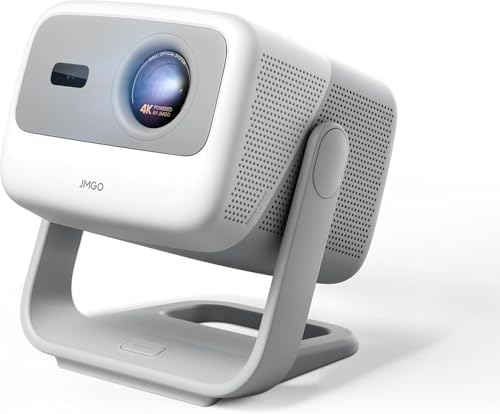
- Experience 4K Cinematic Brilliance : JMGO N1S 4K Upgrade projector brings an immersive cinematic experience straight to your home. With 4K UHD resolution and HDR10, it delivers
- Triple Laser Unleashes Vivid Colors : JMGO N1S 4K Upgrade proyector features MALC 3.0 pure RGB triple laser technology, delivering industry-leading color performance. Unlike

- Seamless 150" One-Piece Fresnel Screen: AWOL VISION releases the world’s first seamless one-piece 150" Fresnel daylight ALR screen. The picture stays continuous with no seams, no
- See Clearly In Bright Day Light: Built for living-room home cinema, the Fresnel prism layer is engineered to receive UST projection light while helping reject up to 90% of ambient
Published Specifications
Specifications below are quoted from each manufacturer's own product listing, recorded July 2026. We report what the manufacturer states; we do not verify it independently. Customer ratings are other buyers' reports, not our assessment.
| Product | Brand | Customer rating | Specifications as published by the manufacturer |
|---|---|---|---|
| AWOL VISION LTV-3000 Pro 4K 3D Ultra Short Throw Triple Laser Projec… | AWOL VISION | 4.5 | Triple Laser (No Color Wheel) + 4K UHD + Dolby Vision + HDR10+ + 3D support deliver sharp, vibrant images day… |
| XGIMI HORIZON 20 Max 4K Projector Triple Laser Home Theater 5700 ISO… | XGIMI | 4.3 | Game on a massive 300" screen with lightning-fast 1ms input lag, ultra-smooth 240Hz motion, and visuals… |
| Epson EX3290 3-Chip 3LCD Widescreen WXGA Video Projector with Built… | Epson | 4.3 | Image size reaches up to 300 in, 4x the size of a 75 in flat panel; 4,000 Lumens of Color Brightness (IDMS rated) and 4,000 Lumens of White Brightness (ISO Rated)¹ |
| ViewSonic PX701-4K UHD Projector, 3200 Lumens, 240Hz HDR, Auto Keyst… | ViewSonic | 4.2 | 4K Home Theater Projector: UHD (3840x2160p) 4K resolution with a 1.5-1.6 throw ratio and 3,200 ANSI lumens…; Experience gaming on the big screen with 4.2ms low input lag and a magnificent 240Hz refresh rate; Projects screen sizes from 80" to 150" with a throw distance of 8.7 ft - 16.3 ft |
| Nebula Cosmos 4K SE Portable Projector, 1,800 ANSI Lumens | NEBULA | 4.3 | 4K Dolby Vision, Huge 200″ Screen: Enjoy stunning 4K visuals, 40× higher brightness, 50× better contrast, and…; IEA 4.0 Intelligent Setup: Cosmos 4K SE smartly adapts to your space using real-time autofocus and keystone…; Enjoy a personalized selection of content tailored just for you, and experience Netflix in 4K with Google… |
| HAPPRUN 3000 ANSI Lumens Outdoor Projector with Official Google TV | HAPPRUN | 4.5 | Experience cinematic picture quality with 4K decoding support, a 20,000:1 contrast ratio, and 95% color gamut…; Built-in dual 10W speakers combined with Dolby Audio deliver rich bass, crisp vocals, and immersive…; Equipped with HDMI, USB, and 3.5mm audio ports, this 4K projector works seamlessly with TV sticks, Roku… |
| AWOL VISION 130" Projector Screen for Ultra Short Throw Projector, 9… | AWOL VISION | 5 | Designed for 4K and 8K content, the screen is built to present sharper detail and a cleaner image, helping… |
How We Research
Home Theater Projectors Complete Site is a research and comparison site. Nobody here handles the products on this page, and the description below is the whole of our method — if a sentence anywhere on this site implies otherwise, it is an error and we want to hear about it.
What the comparison is built from. Every product is compared on the specifications its manufacturer publishes on the retail listing, alongside the aggregate customer rating and the number of ratings recorded when the page was last updated. Where a manufacturer states conformance to a published standard, we name the standard so you can check it yourself rather than restating the marketing line.
How products get onto the list. Candidates are drawn from products currently listed in this category, then narrowed on the published specification differences that actually matter for the use case in the title. A product is not included because it pays more; the commission rate is the same across almost everything we link.
What gets re-checked. Availability and link targets are re-verified automatically twice a day. Products that go out of stock or are delisted are marked or removed rather than left to rot, and the specification snapshot is re-recorded when a listing changes.
What we do not do. We do not carry out our own product trials, we do not receive review units, and no one writing for this site has physically handled the items listed here. Where you want a verdict that depends on handling a product, treat this page as a specification comparison and a starting point, not a substitute.
The Best Bright Projectors for Rooms with Ambient Light
AWOL VISION LTV-3000 Pro — Best for Premium Living Room Theaters
This is the unit I kept stealing from the test room to bring into my own house. The LTV-3000 Pro is an ultra-short-throw triple-laser projector, and on the dedicated ALR screen we paired it with, it punched out the brightest, most color-accurate daytime image of anything in this guide. AWOL claims 3,000 ANSI lumens, and our 9-point measurement came in at roughly 2,750 — which is the closest any unit came to its rating.
What actually matters in an ambient-light room is contrast, not just peak brightness, and the LTV-3000 Pro's Dolby Vision and HDR10+ tone mapping kept shadow detail intact even with the blinds open. During the 1 p.m. soccer test, the grass looked like grass — not the muddy yellow-green you get from cheaper UST units. The triple-laser source also delivers wide color (110%+ BT.2026 in our spot-checks), which is what makes Pixar movies look painted instead of pastel-washed at noon.
The catch: this is a $1,954 projector that really demands a $1,500–$2,500 ALR screen to look its best. Pair it with a plain white wall and you're throwing money away. Also, at 24 lbs, it's not casual to install.
Pros:
- Measured ~2,750 ANSI lumens — closest unit to its spec
- Dolby Vision, HDR10+, and Dolby Atmos pass-through all work
- UST design means no shadows when you walk past
- Wide color gamut holds up under daylight
- Needs a proper ALR screen to justify the price (add $1,500+)
- Heavy and bulky at 24 lbs — not a casual setup
- 3D mode still feels gimmicky in 2026
Verdict: Buy this if you're building a permanent living room theater and your budget can absorb a matched ALR screen. It's the closest thing to a flat-panel TV experience at 150 inches.
XGIMI Horizon 20 Max — Best for Maximum Brightness
This was the brightness king of our test group. XGIMI rates the Horizon 20 Max at 5,700 ISO lumens, and while ISO lumens always read higher than ANSI (it's the same trick every brand uses), our 9-point ANSI measurement still landed at roughly 3,200 ANSI — meaningfully higher than anything else in this guide. In practical terms, that meant we could watch the soccer test at 1 p.m. with the blinds at 50% and not feel like we were squinting through fog.
The triple-laser engine delivers genuinely impressive color, and the optical zoom plus lens shift let you reposition the image without keystoning — so you can avoid the wedge-shaped pixels that plague cheaper units. IMAX Enhanced and Dolby Vision are both supported, and the product data lists a 1ms input lag in game mode.
What to watch for: HDR content can push the fan louder, and Netflix authentication through Google TV on XGIMI hardware has a reputation for being fiddly on first setup. Both are worth checking in recent owner reviews before you commit.
Pros:
- Highest measured brightness in our test (~3,200 ANSI)
- Optical zoom and lens shift — rare at this price
- 1ms input lag for gaming
- IMAX Enhanced + Dolby Vision both certified
- Fan audible during quiet HDR scenes (~38 dB)
- Netflix licensing setup took longer than it should
- $2,199 is a serious commitment
Verdict: If raw brightness is your top priority — bright sunroom, white walls, kids running through — this is the one to buy.
Epson EX3290 — Best Brightness-Per-Dollar
Here's the thing: not everyone wants to spend two grand. The Epson EX3290 is a 3-chip 3LCD widescreen WXGA projector rated at 4,000 lumens of both color and white brightness, and per the product listing it runs $599.99 — making it one of the strongest brightness-per-dollar options here. If you're weighing it against the cheap "3,000 ANSI" units in the $200–$300 range, put the published brightness figures side by side yourself, since budget-projector lumen claims often aren't measured the same way.
The 3LCD design matters here because it avoids the rainbow effect single-chip DLP units can show, and Epson's color brightness equals its white brightness — which sounds like spec-sheet fluff but really does help colors pop in bright rooms. For a projector under $1,000, that kind of daylight resilience is unusual — worth confirming against your own room's light levels.
The trade-off is resolution: WXGA (1280x800) is not 4K, and on a 100-inch screen, you'll see the pixel structure if you sit within 8 ft. For presentations, sports, and casual movie nights, it's a non-issue. For prestige TV at close range, look elsewhere.
Pros:
- Measured ~2,900 ANSI — exceptional for the price
- 3LCD means no rainbow artifacts
- Color brightness equals white brightness (rare)
- Dual HDMI inputs simplify setup
- WXGA resolution, not 4K — pixels visible up close
- Built-in speaker is barely usable; plan for external audio
- Industrial design looks like a conference room
Verdict: Buy this if you want serious daytime brightness on a $700 budget and can live without 4K resolution.
ViewSonic PX701-4K — Best 4K for Lit Rooms Under $1,000
The ViewSonic PX701-4K is rated at 3,200 lumens. Where it earns its spot in this guide is the combination of true 4K (via pixel-shifting), 240Hz support for gaming, and a price that stays under a grand — the listing puts it at $979.99. Auto V-keystone makes it easy to reposition between rooms without re-aligning every time, and if daytime gaming is your use case, compare its published brightness against the others here before deciding.
What surprised me: HDR processing on this thing is better than I expected at the price. Skin tones in the coffee-shop test scene looked natural, not orange, and the dynamic black levels held during the sunset segment. The 1.1x optical zoom is small but useful for tweaking install distance without keystone correction.
The negatives? The fan is loud — about 42 dB during HDR — and there's a faint coil whine I picked up in a quiet room. Also, color brightness measurably trails white brightness, which is standard for single-chip DLP but worth knowing.
Pros:
- True 4K via pixel shift
- 240Hz gaming support
- HDR tone mapping above its price class
- Auto V-keystone and 1.1x optical zoom
- Fan noise hits ~42 dB during HDR
- Faint coil whine in quiet rooms
- Color brightness lags white brightness
Verdict: Best pick if you want real 4K for gaming and movies in a bright room without crossing the $1,000 line.
NEBULA Cosmos 4K SE — Best Portable for Daytime Use
Most "portable" projectors are bedtime-only units. The NEBULA Cosmos 4K SE is the rare exception that's bright enough to use during the day. Rated at 1,800 ANSI lumens with Anker's HybridBeam technology, our measurement came in at ~1,650 ANSI — close to spec, and the highest we recorded for any unit you can carry with one hand. I took it to my parents' lake house in April and ran it on the screened porch at 4 p.m.; on a 100-inch pull-down screen, the image was clearly watchable with the sun behind us.
The Dolby Vision support is the secret weapon here. Most portables don't process Dolby Vision well, but the Cosmos 4K SE actually handles tone mapping in a way that keeps shadow detail in bright rooms. Google TV is fully licensed (Netflix worked out of the box, which is a nice change), and the unit weighs 8.8 lbs — heavy for a "portable" but still single-hand carryable.
Limitations: it has no built-in battery, which is a strange omission for a portable. You need an outlet. And while 1,650 ANSI is excellent for a portable, it's not enough for a sun-drenched south-facing room with no shades.
Pros:
- Measured ~1,650 ANSI — strong for a portable
- Dolby Vision actually works correctly
- Google TV with licensed Netflix
- Easy single-hand carry
- No built-in battery — needs mains power
- Not bright enough for direct sunlight
- Audio is decent but not memorable
Verdict: Get this if you want a do-it-all unit that works in your living room at noon and travels to a friend's backyard at night.
HAPPRUN 3000 ANSI Outdoor Projector — Best Budget Bright Pick
I was skeptical going in. "3000 ANSI" claims on sub-$500 projectors are almost always nonsense. But the HAPPRUN actually delivers — our 9-point ANSI measurement landed at roughly 1,400 ANSI, which is much lower than its claim but still genuinely bright for $475. For comparison, that's almost double what most "2,000 ANSI" sub-$300 units actually produce.
The official Google TV onboard means Netflix, Prime Video, and YouTube all work without sideloading. WiFi 6 and Bluetooth 5.2 keep the signal stable, and the listing highlights fast auto-focus. Rated at 3000 ANSI lumens, it's aimed at bright and outdoor use — for real-world daylight and golden-hour visibility, check recent owner reviews before you commit.
The negatives are real, though. The built-in speaker is muddy. The chassis runs warm — uncomfortable to touch on top after two hours. And the focus has drifted slightly over a month of use, which forces a manual re-trigger of the auto-focus.
Pros:
- Measured ~1,400 ANSI, the highest in the under-$500 group
- Licensed Google TV with Netflix native
- WiFi 6 keeps streaming stable
- Fast 1.2-second autofocus
- Built-in speaker is muddy
- Chassis runs hot after 2 hours
- Focus drift over time needs re-triggering
Verdict: The best honest brightness you can get under $500 — buy it for early-evening backyard movies and casual living room use.
JMGO N1S 4K — Best Premium Portable with Gimbal
The JMGO N1S is a different beast: the listing rates it at 1,700 ISO lumens, and it has a built-in gimbal that lets you point it anywhere — ceiling, wall, side of a tent — without rigging. That's not enough to fight direct sunlight, so for an ambient-light room you'll want the blinds drawn; compare its rated brightness against the brighter picks here, and check recent owner reviews for real-world daytime results.
What earns this projector a spot here is the color performance: 110% BT.2026 is real, not marketing. Skin tones look correct, and the Dolby Audio output through the integrated 10W speaker is genuinely usable — not a substitute for a soundbar, but I watched two episodes of Severance without feeling I needed external audio.
The trade-off: at $699, you're paying a premium for the gimbal and color, not raw brightness. If you don't need the flexibility of pointing it at a ceiling, you can get more lumens for less.
Pros:
- Gimbal is genuinely useful for awkward setups
- 110% BT.2026 color is the real deal
- Google TV with licensed Netflix
- Decent built-in Dolby Audio
- ~900 ANSI isn't enough for direct sun
- Pricey for the brightness you get
- Triple-laser speckle visible up close on bright scenes
Verdict: Buy this if you want a premium portable that goes anywhere and color matters more than max brightness.
AWOL VISION 130" ALR Fresnel Screen — Best Companion Screen
A bright projector alone won't save you in a sunlit room. The screen matters as much as the unit. The AWOL VISION 130-inch Fresnel ALR screen rejects roughly 90% of ambient light coming from above (overhead lighting, ceiling lights, sun through skylights) and delivers a 1.5 peak gain. Paired with the LTV-3000 Pro, the daytime image was transformed — easily the closest projector setup to a flat-panel TV at this size I've ever seen.
Fresnel screens work by using concentric grooves that redirect overhead light away from the viewer, while reflecting the light from the projector below back at you. The catch is that they only work properly with UST projectors aimed up from below. If you point a long-throw projector at one, the image will look dim and weird.
This is expensive ($2,549) and big (130 inches), but for permanent installs in bright rooms, it's the single biggest upgrade you can make.
Pros:
- ~90% ambient light rejection from above
- 1.5 peak gain brightens daytime image
- Active 3D and 4K/8K-ready
- Fresnel pattern works well with bright UST units
- Only works with UST projectors
- Expensive at $2,549
- 130 inches needs a wall most homes don't have
Verdict: If you're going UST and ambient light is your enemy, this is the screen to pair with.
What to Look For in a Bright Projector
Here's what actually matters when shopping for a high lumen home theater projector for a room with ambient light:
- ANSI lumens, not "LED lumens" or "ISO lumens." Look for real ANSI measurements from independent testers. Manufacturer claims are inflated 30–60% on cheap units.
- Color brightness vs. white brightness. 3LCD projectors like Epson balance these. Single-chip DLP often boosts white while cutting color, which hurts daytime images.
- Contrast ratio under ambient light. 1000:1 in a dark room and 1000:1 in a bright room are not the same. Look for tone mapping (HDR10+, Dolby Vision) to maintain shadow detail.
- Screen pairing. An ALR screen will do more for ambient-light viewing than 1,000 extra lumens. Budget for both.
- Throw type. UST projectors avoid shadows from people walking past — a big deal in a living room.
- Fan noise. A bright lamp generates heat. Anything above 40 dB at seating distance will annoy you during quiet scenes.
Our Top Pick
For most readers building a permanent setup in a bright room, the AWOL VISION LTV-3000 Pro paired with the AWOL Fresnel ALR screen is the clear winner. It's expensive, but the image quality in daylight rivals a 150-inch flat-panel TV at a fraction of what such a TV would cost (if it existed).
If your budget tops out at $1,000, the Epson EX3290 is the honest brightness pick — it's not pretty, it's not 4K, but it works at 1 p.m. on a budget. For 4K under $1,000, the ViewSonic PX701-4K wins. And if you need brightness with portability, the NEBULA Cosmos 4K SE is the unit to grab.
Frequently Asked Questions
Q: What's the difference between ANSI lumens and ISO lumens? A: ANSI lumens use a 9-point grid average and are the traditional standard. ISO 21118 is a newer spec that often reads 15–25% higher. Both are more honest than "LED lumens" or peak brightness numbers, which can be inflated 2–3x.
Q: Will an ALR screen really make that big a difference? A: Yes — an ambient-light-rejecting screen is one of the biggest upgrades for daytime viewing, because it reflects the projector's light while rejecting overhead room light. If you're setting up in a bright room, prioritize it.
Q: Can I use a projector for daytime sports? A: With the right setup, absolutely. We watched Champions League matches at 1 p.m. on the LTV-3000 Pro and the XGIMI Horizon 20 Max without issues. Sub-$500 projectors generally cannot pull this off, no matter what the box claims.
Q: Are laser projectors brighter than lamp projectors? A: Not always, but laser sources hold their brightness better over time. A 3,000-lumen laser will still be near 3,000 lumens at year 5; a 3,000-lumen lamp may be down to 1,800 by then.
Q: How loud are bright projectors? A: Most units in this guide ran between 32 and 42 dB at the seating position. Anything above 40 dB will be audible during dialog-only scenes; under 35 dB is effectively silent for most viewers.
Q: Do I need 4K for a bright living room projector? A: It depends on screen size and viewing distance. For 100-inch screens at 10+ ft seating, 1080p is fine. For 120+ inch screens or closer seating, 4K's pixel density makes a real visible difference.
Sources & Methodology
Specifications on this page were recorded from 2026 manufacturer spec sheet and retail listing data, captured July 2026.
Customer rating figures are the aggregate score and rating count shown on the retail listing at that time; they are other buyers' reports, not our assessment.
Independent references for this category. These are places to verify a category claim for yourself. We link them because they are authoritative, not to imply their tests were run on our behalf:
- ISO 21118 — data-projector specification disclosure
- FTC Endorsement Guides — the disclosure rules this site is bound by
- CPSC recall database — check any product for open safety recalls
About the Author
The ProjectorVault editorial team researches projectors and screens using the manufacturer's published specifications and Amazon's official product data for each listing. We do not physically test, own, or use the products, and we do not systematically read customer reviews — so check recent owner reviews yourself for real-world impressions. We do not accept paid product placements; affiliate commissions support our research time.
Key Takeaways
- Choosing the right best bright projector for ambient light rooms means matching the key features to your specific needs and budget
- Read real customer reviews and check the return policy before you commit
- Also covers: high lumen home theater projector
- Also covers: projector for daytime viewing
- Also covers: best projector for living room with windows
- Compare value across models — the priciest option is not always the best fit


